
Pruning
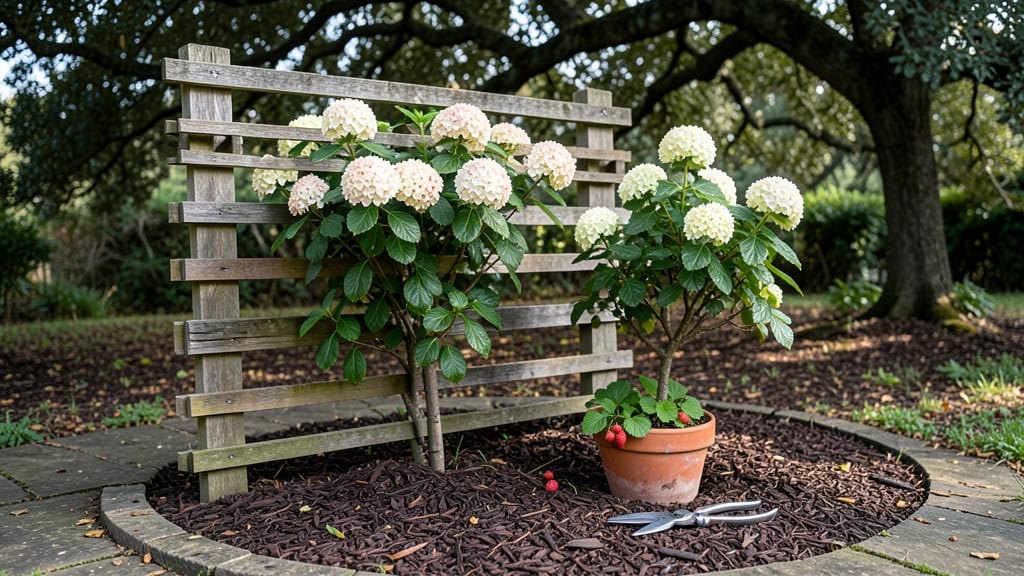
Creating a strawberry vanilla hydrangea tree form garden is like designing a living perfume bottle—where every season brings new layers of scent and beauty. 🌸 I stumbled upon this combo after craving year-round fragrance without sacrificing edible or ornamental value.
The secret lies in layering hydrangea’s lush blooms with vanilla’s sweet aroma and strawberries’ playful charm, all while keeping the design effortless yet striking.
Start with a tree hydrangea (Hydrangea paniculata) as your focal point—its upright growth habit creates natural vertical interest. Tuck vanilla vines (Hedychium coronarium or Vanilla planifolia for climates that allow it) along trellises nearby, where their fragrant flowers will cascade like golden ribbons.
Underplant with June-bearing strawberries in containers or along the base; their glossy leaves contrast beautifully with hydrangea’s foliage while adding a functional harvest.
By midsummer, you’ll have hydrangea blooms that last into fall, vanilla’s citrusy-sweet scent wafting through the air, and strawberries ready to pick. The combo thrives in partial shade, making it perfect for patios or under trees. Plus, bees adore it—turning your garden into a pollinator paradise while keeping maintenance simple.
For best results, space the hydrangea 10–15 feet apart and train vanilla vines to climb nearby structures. Prune hydrangeas in late winter to encourage bushier growth, and harvest strawberries in two waves (early and late summer).
This trio proves you can have edible, fragrant, and ornamental all in one stunning display—without the fuss.
📚 In This Guide
- What you need
- Instructions
- Tips and common mistakes
- Wrapping up and next steps
What you need
- ● Pruning shears: Sharp, bypass-type shears (2–3 pairs, sterilized with rubbing alcohol)
- ● Hand pruners: For smaller branches (1 pair, ergonomic grip)
- ● Loppers: For thicker stems (1 pair, 10–12 inch blades)
- ● Garden gloves: Heavy-duty, cut-resistant (1 pair)
- ● Disinfectant: 70% isopropyl alcohol or copper fungicide (small spray bottle)
- ○ Pruning sealant: (Optional but recommended for large cuts, latex-based)
- ● Stake & twine: (For supporting new growth, 3–4 ft bamboo stakes)
- ● Tree form template: Printed or hand-drawn guide (or use a wire frame for reference)
- ● Extension pole: (For high branches, 6–8 ft reach)
- ● Hose or bucket: (For rinsing tools and cleaning cuts)
- ● Sharpie or marker: (To label cuts if needed)
- ● Mulch: (Organic, 2–3 inch layer for post-pruning care)
- ● Fertilizer: (Balanced 10-10-10 or hydrangea-specific)
How to shape a strawberry vanilla hydrangea into a tree form
Transform your hydrangea into a stunning, fragrant focal point with this elegant shaping technique.
🌱 Step 1: Select and Prune the Central Leader Stem
Start by identifying the strongest, straightest vertical stem in your hydrangea—this will become your tree trunk. Using sharp, sterilized pruning shears, cut back any competing vertical stems at their base to eliminate competition for nutrients. Leave only one dominant stem, trimming it back to about 12-18 inches from the ground. This encourages branching and creates a sturdy foundation.
Make your cuts just above a leaf node or bud, angled slightly away from the stem. The reason for this is to prevent water from pooling on the cut surface, which could lead to rot. Once you've made your initial cut, step back and visualize the potential shape—your tree form should have a clear, defined trunk with room for future branches to spread into a rounded canopy.
🌿 Step 2: Encourage Lateral Branching
After pruning the central leader, focus on the remaining growth points. Hydrangeas naturally produce lateral buds along the stem, but they may need a little encouragement to develop. In early spring, apply a balanced, water-soluble fertilizer (10-10-10 ratio) to stimulate new growth. This is where the magic happens—your goal is to coax the plant into producing multiple sturdy branches that will form the tree's canopy.
As new shoots emerge, select the 4-6 strongest lateral branches that are evenly spaced around the central stem. These will form the primary scaffold branches of your tree. If any shoots grow too close together, remove the weaker one to avoid overcrowding. You'll notice the remaining branches will start to fill out more quickly, creating a fuller, more structured form.
✂️ Step 3: Shape the Canopy and Maintain Balance
Once your scaffold branches are established—typically after 1-2 growing seasons—it's time to refine the tree form. Begin by pruning back the tips of each scaffold branch to encourage bushier growth. Cut just above a set of leaves or buds, making sure to maintain the branch's natural angle. This step is critical for creating a rounded, balanced canopy that mimics the shape of a mature tree.
As the plant grows, continue to monitor and adjust the shape. Remove any branches that grow inward or cross over others, as these will create weak points and reduce airflow. Aim for a canopy that's 2-3 times as wide as the trunk is tall. This proportion ensures stability and allows sunlight to reach all parts of the plant, promoting even blooming and fragrance. Regularly check for dead or diseased branches and prune them out immediately to keep the tree healthy.
🌸 Step 4: Refine for Fragrance and Bloom Production
The strawberry vanilla hydrangea's signature scent and delicate blooms thrive when the plant is well-pruned and healthy. In late winter or early spring, before new growth begins, perform a light pruning to remove any dead wood and shape the tree further. This is also the time to adjust the height of the tree by cutting back the central leader if it has outgrown your desired proportions. Remember, hydrangeas bloom on both old and new wood, so avoid heavy pruning in late summer or fall.
To enhance fragrance, ensure your tree receives morning sun and afternoon shade, especially in hot climates. This protects the blooms from scorching while allowing the plant to develop its signature vanilla-strawberry aroma. Mulch the base of the tree with 2-3 inches of organic mulch to retain moisture and regulate soil temperature. Water deeply once a week, ensuring the soil remains evenly moist but not waterlogged. You'll notice the fragrance intensifies as the plant matures and the blooms fully open.
Tips & tricks for perfect strawberry vanilla hydrangea tree form
Transforming your hydrangea into a fragrant tree form takes patience and precision—but these insider tricks will help you achieve that picture-perfect shape without sacrificing health or fragrance.
Pruning Precision: When making your initial cuts in Step 1, use a sharp, sterilized saw for thicker stems over ½-inch in diameter. The clean cut reduces stress on the plant and promotes faster healing. I've found that making cuts at a 45-degree angle just above a leaf node or bud creates the ideal surface for new growth to emerge. This technique prevents water from pooling and minimizes the risk of rot, which is especially important for the central leader stem that forms your trunk.
Fertilizer Timing: In Step 2, applying the 10-10-10 fertilizer in early spring is crucial, but don't overdo it. Too much nitrogen can lead to excessive leaf growth at the expense of blooms. I recommend splitting the fertilizer into two applications: half in early spring when new growth begins, and the remaining half after the first flush of leaves has developed. This staggered approach ensures balanced growth without overwhelming the plant.
Canopy Proportion: The 2-3 times wider than tall guideline in Step 3 is your target, but achieving it requires regular adjustments. I've found that using a simple ratio like 3:1 (width to height) for young trees and 2:1 for more mature specimens helps maintain stability. To visualize this, imagine your tree as an upside-down cone—each scaffold branch should contribute equally to this shape. This balanced structure prevents the tree from becoming top-heavy and ensures even sunlight exposure for optimal fragrance development.
Seasonal Pruning Strategy: The light pruning mentioned in Step 4 should be done in late winter or early spring, but don't wait until the last minute. I schedule my pruning for February in most climates, which gives the plant several weeks to recover before the growing season begins. For regions with mild winters, you can extend this window to March. Avoid pruning in late summer or fall when the plant is preparing for dormancy, as this can stimulate new growth that won't have time to harden off before winter.
Pro Tips for Strawberry Vanilla Hydrangea Tree Form
- Transforming your hydrangea into a fragrant tree form takes patience and precision—but these insider tricks will help you achieve that picture-perfect shape without sacrificing health or fragrance.
- Pruning Precision: When making your initial cuts in Step 1, use a sharp, sterilized saw for thicker stems over ½-inch in diameter.
- Fertilizer Timing: In Step 2, applying the 10-10-10 fertilizer in early spring is crucial, but don't overdo it.
Frequently asked questions
Got questions about cultivating or caring for your strawberry vanilla hydrangea tree form? You’re not alone! Here are some of the most common queries—and their answers—to help you grow a fragrant, flourishing tree with ease.
How fast does the strawberry vanilla hydrangea tree form grow?
The growth rate varies, but expect 12–24 inches per year under ideal conditions (full sun to partial shade, well-draining soil, and regular watering). Dwarf varieties may grow slower (6–12 inches/year), while standard forms can reach 6–10 feet tall in 5–7 years with proper care. Patience pays off—those intoxicating blooms are worth the wait!
When is the best time to prune this hydrangea for maximum fragrance?
Prune right after flowering (late summer/early fall) to encourage next year’s blooms. Avoid heavy pruning in spring, as this can remove next season’s flower buds. For shaping, trim dead or crossing branches anytime, but leave at least 1/3 of the plant’s structure intact to maintain its tree form and fragrance.
Why aren’t my strawberry vanilla hydrangea blooms as fragrant as they should be?
Fragrance fades with over-fertilizing (especially nitrogen-heavy fertilizers), poor air circulation, or stress from drought/heat. To boost scent:
- Use a balanced, acid-loving plant fertilizer (like 10-10-10) in early spring.
- Ensure 6+ hours of sunlight daily and consistent moisture (mulch helps!).
- Prune to open the canopy for better airflow.
Can I grow a strawberry vanilla hydrangea in a container?
Yes! Choose a large container (at least 18–24 inches wide) with drainage holes and use a well-draining, acidic potting mix. Opt for dwarf or patio varieties (like ‘Annabelle’ or ‘Endless Summer’ hybrids) to keep it manageable. Move containers indoors during winter freezes (below 20°F) or wrap them in burlap for protection. Just remember: containers dry out faster, so water frequently!
What’s the difference between the strawberry vanilla hydrangea and regular hydrangeas?
This hybrid stands out for its triple appeal:
- Fragrance: Emits a strawberry-vanilla scent (unlike most hydrangeas, which are scentless).
- Tree Form: Grown on a strong, upright structure (vs. bushy mopheads or lacecaps).
- Extended Blooms: Produces two flushes of flowers (spring/summer and fall) with proper care.
Wrapping up and next steps
The Strawberry Vanilla Hydrangea Tree Form is a dream for gardeners craving year-round fragrance and show-stopping blooms—and with the right pruning care, it’s entirely within reach! 🌸 From understanding its unique growth habits to mastering seasonal trims, you now have the tools to keep this beauty thriving.
The key? Patience, precision, and a little love—your garden will thank you with lush, fragrant rewards.
Ready to take the next step? Start small: pick one pruning task from this guide and schedule it into your gardening routine. Before you know it, your hydrangea will be the star of your outdoor space—and your neighbors will be jealous! 🌿✨