
Pruning
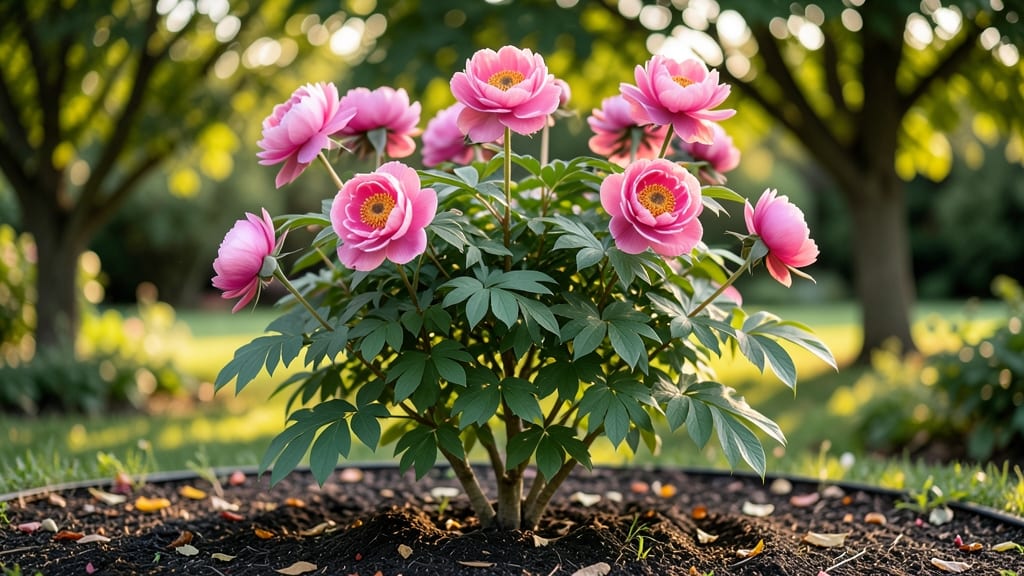
The tree peony height you end up with depends entirely on the variety you choose—some stay compact at 2 feet, while others tower to 6 feet or more.
Picture this: You plant a Tree Peony 🌸 in your garden, dreaming of those lush, fragrant blooms, only to watch it shoot up faster than you can prune it back. Or maybe you’re working with limited space and need a dwarf variety that stays neatly contained.
Either way, knowing your peony’s growth potential upfront saves you from awkward spacing mistakes or overzealous trimming.
Most tree peonies mature between 3 and 5 feet, but the difference between a dwarf cultivar and a standard one can mean the difference between a neat border plant and a garden centerpiece that overshadows everything else.
Below, I break down the height ranges for the most popular varieties, plus the pruning secrets to keep them at your ideal size.
You’ll also learn how sunlight, soil, and pruning habits can push your peony toward the taller end of the spectrum—or keep it shorter than expected. Let’s get started.

Tree peony height by variety: growth charts for common cultivars
Choosing the right tree peony variety depends heavily on its mature height and spread. Some varieties stay compact at just 2–3 feet, while others tower over 6 feet, making them perfect for focal points.
Understanding these differences helps you plan your garden layout and pruning schedule to avoid overcrowding or awkward spacing.
Tree peonies grow at different rates, with some reaching half their mature height in just 2 years. Others take 4–5 years to fully establish.
Below, I’ve compiled a growth chart for 12 popular varieties, including their height ranges, spread, and growth habits to help you pick the perfect fit for your space.
🌸
How tree peony height affects pruning timing and techniques
Your tree peony's height directly impacts when and how you should prune it. Tall varieties like 'Sarah Bernhardt' (up to 5 feet) need more aggressive shaping, while dwarf types like 'Koi No Mai' (2-3 feet) require gentle maintenance.
The key is timing—pruning too early can damage flower buds forming underground, while waiting too long risks overgrowth or disease.
For all varieties, the best pruning window is late winter to early spring, just as new growth begins but before buds swell. This timing ensures you remove dead wood without disturbing next year's blooms.
However, tall varieties may need a second light trim after flowering to maintain shape, while dwarf types rarely require post-bloom pruning.
Pruning Steps by Tree Peony Height
- Step 1: Identify your variety's height—dwarf (<2 ft), semi-dwarf (2-3 ft), or standard (>3 ft). This determines pruning intensity.
- Step 2: Wait until late winter (USDA Zone 6a: February-March) when dormant buds are visible but stems are still bare.
- Step 3: For tall varieties, cut back 1/3 of last year's growth to encourage bushiness. Use clean, sharp pruners at a 45-degree angle.
- Step 4: For dwarf varieties, remove only dead or crossing branches. Avoid heavy cuts—these types bloom on older wood.
- Step 5: Sanitize tools between cuts with rubbing alcohol to prevent bacterial spread. Dispose of diseased branches immediately.
- Step 6: After flowering, tall varieties may need a light trim (10-15%) to maintain shape, while dwarf varieties require no post-bloom pruning.
Never prune tree peonies in fall—this can stimulate late-season growth that won't harden off before frost. Instead, focus on mulching (3-4 inches of organic matter) to protect roots during winter. For overgrown specimens, gradual pruning over 2-3 years prevents shock.
Pro tip: Mark pruning dates on your garden calendar to avoid mistakes. Tall varieties like 'Duchesse de Nemours' benefit from annual shaping, while dwarf 'Lavender Lady' thrives with minimal intervention. Always prioritize airflow—thin out crowded branches to reduce disease risk.
If you're unsure about your tree peony's height category, measure it now and compare to these guidelines. Dwarf types under 2 feet need the gentlest touch, while anything over 4 feet requires regular maintenance to prevent legginess. Start pruning today—your peony's future blooms depend on it!