
Pruning
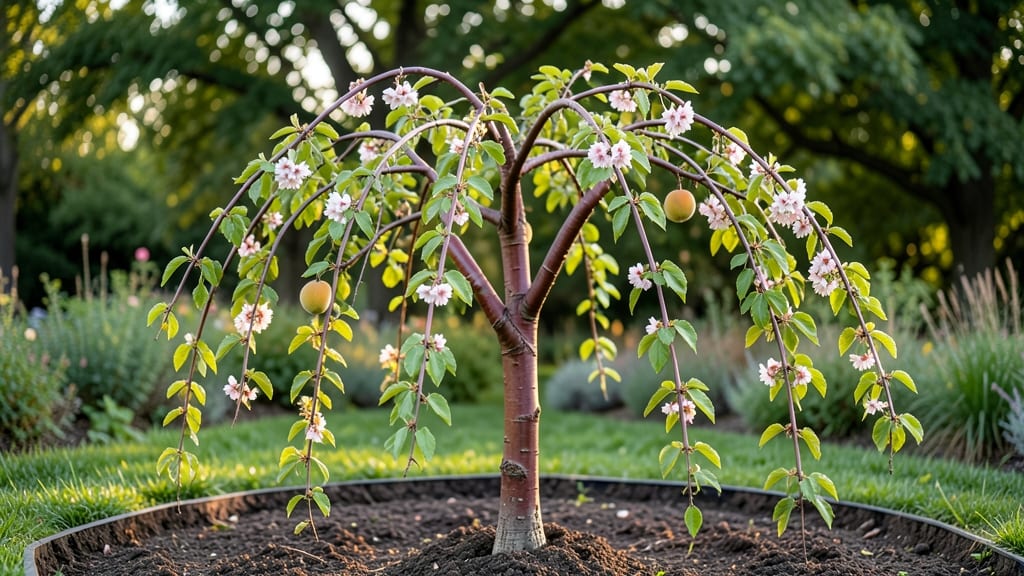
Weeping peach tree images turn any garden into a living watercolor painting. 🌸 Their cascading branches create a dramatic canopy that dances with spring blossoms and autumn foliage, making them the star of any landscape design.
Unlike ordinary peach trees, these graceful giants offer year-round interest—delicate flowers in spring, lush green foliage through summer, and fiery fall hues that linger into winter.
The secret to showcasing their beauty lies in placement. Near patios or along water features, their weeping habit casts dappled shade perfect for outdoor seating.
Pair them with ornamental grasses or low-growing perennials to highlight their elegant silhouette, or use them as a focal point in large lawns where their branches can truly spread.
The contrast between their upright trunk and drooping limbs creates a natural, artistic focal point that feels both timeless and effortlessly chic.
What you’ll love most is how they transform seasons. Spring brings clouds of pink blossoms, summer offers shade and occasional fruit, and fall delivers a fiery display that rivals any maple.
Even in winter, their structure adds architectural interest to bare landscapes. These trees aren’t just plants—they’re living sculptures that elevate any garden’s drama and charm.
For best results, plant them where they have 6-8 hours of sunlight and room to grow (they can reach 20-30 feet wide). Prune lightly to encourage their natural weeping shape, and watch as your garden becomes a showstopper.
The payoff? A tree that looks stunning in every season, with minimal fuss.
📚 In This Guide
- What you need
- Instructions
- Tips and common mistakes
- Wrapping up and next steps
What you need
- ● Pruning shears: Bypass pruners (sharp, 6–8" blades) for clean cuts on small branches.
- ● Loppers: Long-handled (20–24") for thicker branches (½"–1.5" diameter).
- ● Pruning saw: Curved-tooth, 8–10" blade for stubborn, woody limbs.
- ● Gloves: Heavy-duty, cut-resistant (gardening or pruning-specific).
- ● Disinfectant: 70% isopropyl alcohol or pruning sealant to sterilize tools between cuts.
- ○ Tree ties or soft cloth strips: For securing branches during shaping (optional but helpful).
- ● Ladder or step stool: Sturdy, extendable (reach 8–10' safely).
- ● Bucket or tray: For collecting debris (5-gallon size works well).
- ● Camera or smartphone: With macro mode for close-up details.
- ● Tripod: Lightweight, adjustable for steady shots.
- ○ Reflector or diffusers: For soft lighting (optional but enhances mood).
- ● Notebook or sketchpad: To sketch pruning plans before cutting.
- ● Weather check: Prune on a dry, calm day (avoid rain or wind).
- ● Tree health: Only prune dormant trees (late winter/early spring) for peaches.
- ● Safety gear: Sunglasses, long sleeves, and closed-toe shoes (protect from branches/sawdust).
- ● Permits (if applicable): Check local regulations for large trees or public spaces.
How to cultivate a stunning weeping peach tree
Transform your landscape with this elegant tree that combines fruit production with breathtaking form.
🌱 Step 1: Select the Right Variety and Planting Site
Choose a dwarf weeping peach variety like 'Bonanza' or 'Redhaven Weeping' for manageable size and dramatic branches. These varieties produce 3-4 inch fruit while maintaining their graceful, cascading form. Plant in full sun locations with at least 6-8 hours of direct sunlight daily—partial shade reduces both fruit production and the tree's signature weeping habit.
Soil must drain well—peach trees hate soggy roots. Amend heavy clay with 2-3 inches of compost mixed into the top 12 inches of soil. The planting hole should be twice as wide as the root ball but no deeper. This prevents water pooling around the trunk and encourages strong root establishment. I always test drainage by digging a 12-inch deep hole before planting—if water stands for more than 30 minutes, amend with additional organic matter.
☀️ Step 2: Plant and Stake for Proper Structure
Position the tree so the graft union (visible bump near the base) sits 2-3 inches above soil level. This prevents the tree from growing a new trunk from the rootstock, which would ruin its weeping form. Backfill with native soil mixed with 1 part compost to encourage root spread. Water deeply to settle the soil and eliminate air pockets.
Install three stakes in a triangle around the tree, 12-18 inches away from the trunk. Use soft tree ties to secure the trunk at a 45-degree angle if needed—this helps establish the weeping habit early. Never tie directly to the trunk; wrap the ties around the trunk and stake with a 2-inch gap to allow growth. I leave these stakes in place for 1-2 years until the roots establish firmly.
💧 Step 3: Water and Fertilize for Optimal Growth
Water deeply 2-3 times per week during the first growing season, providing 1-2 gallons per watering to encourage deep root development. You'll know you're watering correctly when the soil 6 inches down feels consistently moist but not waterlogged. Overhead watering can spread disease, so use a soaker hose or drip irrigation placed 12 inches from the trunk.
Fertilize in early spring with a 10-10-10 balanced fertilizer applied 12 inches from the trunk in a 6-inch wide circle. Repeat in midsummer. Avoid high-nitrogen fertilizers—they promote leafy growth at the expense of fruit production. I always pair fertilization with a 2-inch layer of mulch (keeping it 6 inches away from the trunk) to retain moisture and regulate soil temperature.
✂️ Step 4: Prune for Structure and Fruit Production
Prune in late winter or early spring before buds swell, removing 25% of last year's growth to maintain the weeping form. Focus on opening the center of the tree to improve air circulation—this prevents fungal diseases that thrive in dense canopies. I always make cuts just outside the branch collar (the swollen area where the branch meets the trunk) to promote faster healing.
Thin fruit when it reaches 1 inch in diameter, leaving 6-8 inches between each peach. This ensures larger, higher-quality fruit and prevents branch breakage. Remove any suckers (shoots growing from the rootstock) immediately—they divert energy from the desired weeping form. The goal is to maintain the tree's natural elegance while maximizing fruit production.
🌿 Step 5: Maintain Year-Round Care for Long-Term Beauty
Monitor for peach leaf curl in early spring—this fungal disease causes puckered, distorted leaves. Treat preventatively with a copper fungicide spray in late fall or early spring before buds swell. Remove and destroy any infected leaves immediately to prevent spread. Healthy leaves are the foundation of that dramatic weeping canopy.
In late fall, apply a 4-inch layer of mulch around the base (keeping it 6 inches from the trunk) to protect roots from winter temperature swings. Weeping peach trees are particularly susceptible to cold damage on their cascading branches, so I always wrap the lower branches with burlap or tree wrap during harsh winters. This simple step preserves the tree's graceful form year after year.
Tips & tricks for cultivating a stunning weeping peach tree
Here's what nobody tells you—these insights will help you transform your garden into a living masterpiece.
Variety Selection Wisdom: When choosing between 'Bonanza' and 'Redhaven Weeping', consider your climate. 'Bonanza' thrives in cooler regions and produces slightly larger fruit (up to 4 inches), while 'Redhaven Weeping' handles heat better and develops that classic weeping habit more dramatically. I've found that both varieties benefit from planting near a south-facing wall—it extends their sunlight exposure by reflecting warmth back onto the cascading branches.
Soil Preparation Secret: The 12-inch deep drainage test before planting is non-negotiable. I've seen weeping peach trees fail spectacularly when planted in clay soil without proper amendment. If your soil drains too slowly (water standing beyond 30 minutes), mix in additional compost or consider raised beds. This prevents root rot while encouraging those graceful branches to develop properly. The 2-3 inches of compost mixed into the top 12 inches creates the perfect environment for root establishment.
Staking Strategy: The 1-2 year staking period is crucial for establishing that signature weeping form. I recommend using three stakes arranged in a triangle rather than a square—the triangular configuration provides more natural support as the branches develop their cascading habit. The 2-inch gap between the tree ties and trunk allows for growth while preventing girdling. Don't be tempted to remove stakes too early—you'll regret it when branches fail to maintain their elegant drape.
Pruning Precision: When thinning fruit at the 1-inch diameter stage, use sharp pruning shears to make clean cuts. I've found that leaving 6-8 inches between peaches prevents overcrowding and allows each fruit to reach its maximum size. The 25% pruning guideline for maintaining the weeping form works best when you focus on removing the oldest branches first—this encourages new growth that will naturally weep downward. Always make cuts just outside the branch collar for fastest healing and to prevent disease entry points.
Pro Tips for Weeping Peach Tree Images
- Here's what nobody tells you—these insights will help you transform your garden into a living masterpiece.
- Variety Selection Wisdom: When choosing between 'Bonanza' and 'Redhaven Weeping', consider your climate.
- Soil Preparation Secret: The 12-inch deep drainage test before planting is non-negotiable.
Frequently asked questions
about weeping peach trees—because every gardener deserves clarity! Whether you're admiring weeping peach tree images or planning your own, here are answers to the most common queries.Why does my weeping peach tree have sparse branches?
Weeping peach trees naturally grow with long, arching branches, but overpruning or poor sunlight can thin them out. Focus on selective pruning in late winter to encourage dense, graceful growth. If branches look leggy, fertilize with a balanced 10-10-10 mix in early spring.
When is the best time to prune a weeping peach tree?
Prune your weeping peach tree during dormancy—late winter (before buds swell) or early spring. Avoid heavy pruning in fall, as it can stimulate late growth vulnerable to frost. For weeping peach tree images with perfect shape, aim for 20-30% annual reduction of old wood.
Can I shape a weeping peach tree like a traditional peach tree?
While possible, weeping peach trees are bred for their dramatic, cascading form. Pruning to a bushy shape risks stressing the tree. If you prefer upright growth, consider grafting a standard peach variety onto a weeping rootstock—but expect weeping peach tree images to dominate!
Will my weeping peach tree produce fruit?
Yes! While their primary appeal is ornamental, weeping peach trees do bear small, sweet fruit—though yields are lighter than standard varieties. Thin fruit early to avoid branch weight issues. For best results, plant in full sun and ensure well-draining soil.
Why are the leaves turning brown or yellow?
Brown/yellow leaves often signal fungal disease (like leaf spot) or nutrient deficiency (e.g., iron chlorosis). Improve airflow by pruning dense areas, and apply copper fungicide if needed. For yellowing, test soil pH—weeping peach trees thrive in slightly acidic (6.0-6.5) soil.
Wrapping up and next steps
The weeping peach tree isn’t just a stunning addition to your garden—it’s a year-round masterpiece that rewards patience and care with its graceful, cascading branches and delicate blooms.
Whether you’re drawn to its dramatic silhouette or its seasonal charm, mastering its pruning and maintenance ensures it thrives for decades. 🌿
Ready to transform your outdoor space? Start by gathering your tools and sketching a simple pruning plan—your future tree will thank you! 🌱