
Plants
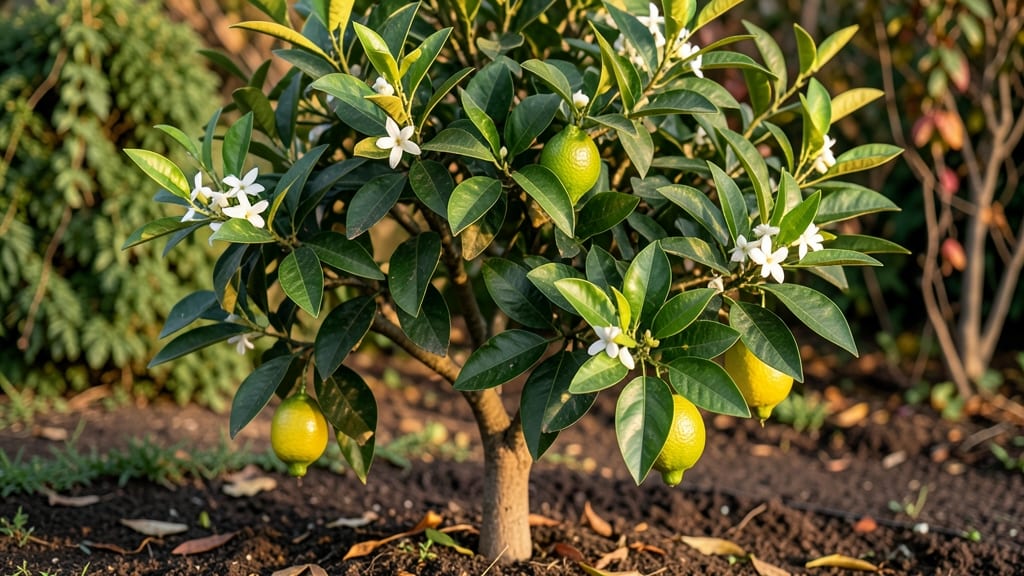
A lemon tree leaf looks like a glossy, deep green oval with fine serrated edges and a sharp point at the tip. These smooth, 2-4 inch leaves grow alternately along the stem and release a fresh citrus aroma when crushed.
A lemon tree leaf's most distinctive feature is its bright, waxy sheen that reflects light beautifully. 🌿 Unlike lime leaves, which are more rounded with a blunter tip, lemon leaves maintain that elegant oval shape throughout their growth cycle.
The serrations along the edges are subtle but consistent, creating a delicate lace-like pattern when viewed closely. What really sets them apart is their intense citrus fragrance—crush one between your fingers and you'll instantly recognize that signature lemon scent.
These leaves also grow in alternate patterns along the branch, with each leaf positioned at a slightly different angle. This arrangement maximizes sunlight exposure while creating that iconic citrus tree silhouette.
When comparing to orange leaves, lemon leaves are generally smaller and more elongated, with a more pronounced point at the tip. The color remains vibrant year-round, though older leaves may develop slightly lighter green undersides.
💡 In This Article
- Key Botanical Features of Lemon Tree Leaves
- How to Identify a Lemon Tree Leaf vs Other Citrus
Key botanical features of lemon tree leaves
The lemon tree leaf's oval shape is actually a slightly elongated ellipse, measuring about 2-4 inches long and 1-2 inches wide, with a distinctive 1:2 length-to-width ratio. The edges feature tiny serrations (about 10-15 per leaf) that create a subtle saw-tooth pattern when viewed under light.
These serrations aren't sharp like those on some tropical leaves—they're more like delicate notches that give the leaf its refined appearance. 🌿
What makes lemon leaves truly unique is their vein structure. Each leaf has 5-7 prominent parallel veins that run from the central midrib toward the edges, creating a fan-like pattern.
This differs from lime leaves, which typically have 3-5 veins, and orange leaves, which often show more pronounced secondary veins. The leaf's glossy surface comes from a waxy cuticle layer that helps reduce water loss—a perfect adaptation for the Mediterranean climate where lemon trees thrive.
The alternate leaf arrangement (where each leaf grows from a different node along the stem) creates that iconic citrus tree silhouette. This pattern allows maximum sunlight exposure while minimizing wind resistance.
When you crush a lemon leaf, the released citral and limonene oils (the same compounds that give lemons their scent) create that unmistakable aroma. These oils serve as natural pest repellents, protecting the tree from insects while adding to the leaf's sensory profile. 💛
One fascinating detail is how lemon leaves maintain their vibrant color year-round. Unlike deciduous trees, lemon trees are evergreen, and their leaves contain high levels of chlorophyll a and b that remain stable in sunlight.
The deep green color comes from anthocyanin pigments in the cell walls, which give the leaf its rich hue while also providing some UV protection. This is why lemon leaves stay visually striking even in winter, unlike many other citrus varieties.
The leaf's pointed tip (called the acumen) is another key feature. It's typically acute (less than 90 degrees) and often slightly curved, creating a graceful arc when the leaf grows. This differs from grapefruit leaves, which tend to have more rounded tips.
The leaf's underside is slightly lighter green and may show smaller secondary veins that create a subtle network pattern when viewed against light. 🌟