
Watering
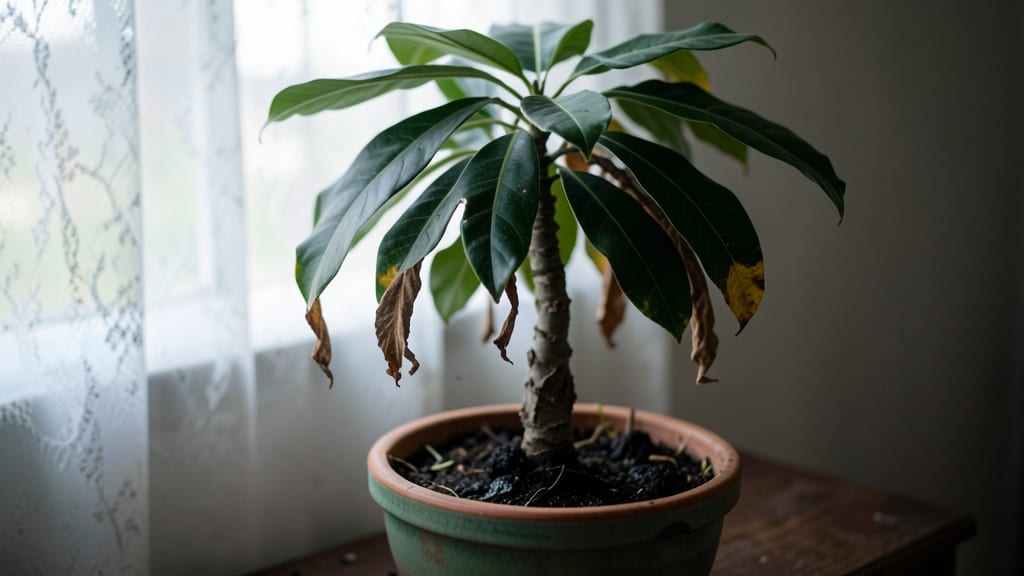
What does an overwatered money tree look like? It turns its glossy leaves into sad, drooping messes—yellowing, mushy roots, and soil that smells like a swamp. 🌱 I’ve seen this exact scene play out more times than I’d like to admit, and the good news? It’s almost always fixable if you catch it early. The first warning sign is leaves that feel soft to the touch, almost squishy, with brown edges that look like they’ve been dipped in weak tea. Check the roots—healthy ones are firm and white, while overwatered roots turn black and rot like overcooked pasta. Your plant isn’t just thirsty; it’s drowning. Here’s the game-changer: Let the top 2-3 inches of soil dry out completely between waterings. Dump the soggy pot into a saucer to drain excess water, and repot if the roots smell funky. Within 2-3 weeks, you’ll see new growth pushing through, and those leaves will perk back up like they never had a problem. Between you and me, I’ve brought back money trees that looked like they were on their last legs—just by adjusting the watering routine. The key is patience and observation. Your plant will thank you with glossy, happy foliage in no time.
Root Causes Of Overwatering
When your money tree (Pachira aquatica) starts looking sad with drooping leaves, yellowing foliage, or worse—mushy roots—it’s often a cry for help from the soil. Overwatering isn’t just about giving your plant too much love; it’s a scientific imbalance that disrupts the plant’s natural processes.
Let’s break down the key reasons why this happens, so you can fix it before it’s too late.
Money trees thrive in well-draining soil, but when the mix holds too much water, roots suffocate. Here’s why:
- Compacted or heavy soil: Clay or dense potting mixes trap moisture, preventing oxygen from reaching the roots. Without oxygen, roots can’t respire (breathe), leading to anaerobic conditions—a toxic environment for your plant.
- Lack of organic matter: Soil without perlite, sand, or compost retains water like a sponge. Roots in soggy soil can’t absorb nutrients efficiently, causing nutrient deficiency symptoms (like yellow leaves) even if you’re fertilizing.
- No drainage holes: If your pot lacks holes at the bottom, excess water pools at the root zone, creating a waterlogged effect. Even if you think you’re watering "just right," the plant can’t escape the excess.
Actionable fix: Use a chunky potting mix (60% peat/compost + 30% perlite + 10% sand) and repot into containers with drainage holes. Pro tip: Press your finger 1 inch into the soil—if it’s damp, wait before watering again! 🌡️
Many plant owners fall into the trap of routine watering, assuming a fixed schedule works for all conditions. But money trees are sensitive to:
- Environmental humidity: High humidity (like in bathrooms or kitchens) slows evaporation, keeping soil wet longer. Low humidity (e.g., near AC vents) speeds up drying.
- Seasonal changes: Winter means slower growth = less water needed. Summer heat? Your plant drinks like a camel.
- Pot size and material: Small terracotta pots dry out faster than large plastic ones. A 6-inch pot may need water every 5–7 days, while a 12-inch pot could go 2–3 weeks.
Actionable fix: Switch to the "finger test" instead of a schedule. Stick your finger 1–2 inches into the soil—if it’s dry, water; if moist, hold off. 👆💧
Bigger pots = more soil = more water retention. If you repot your money tree into a container that’s too large without adjusting your watering habits, the excess soil stays damp for weeks, inviting:
- Fungal growth: Fungi like Phytophthora and Pythium thrive in waterlogged soil, attacking roots and causing root rot.
- Bacterial infections: Bacteria such as Erwinia multiply in stagnant water, releasing toxins that weaken the plant’s vascular system.
- Nutrient dilution: More soil = nutrients spread thin. The plant can’t uptake what it needs, leading to chlorosis (yellowing leaves) even if the roots are drowning.
Actionable fix: Only repot into a container 1–2 inches larger than the current root ball. If you must use a bigger pot, add extra dry potting mix to offset water retention. 🌱✨
Money trees are resilient, but they do send warning signs before they’re in critical condition. Common missteps:
- Waiting for "visible wilting": By the time leaves droop, root damage may already be irreversible. Early signs include:
- Leaves turning yellow at the edges (not just tips).
- A sour or rotten smell from the soil.
- Black, mushy roots when gently pulled away from the soil.
- Assuming "more water = happier plant": Money trees are tropical but not rainforest floor dwellers—they need aerated conditions, not swampy ones.
Actionable fix: Check roots monthly by gently removing the plant from its pot. Healthy roots are firm and white; rotten ones are dark, slimy, and crumbly. Trim affected roots with sterilized scissors and repot in fresh, dry mix. 🔪🌿
How to Fix an Overwatered Money Tree
Overwatering your money tree (Pachira aquatica) can feel like a slow-motion disaster—wilting leaves, yellowing foliage, and that dreaded mushy root smell. But don’t panic! With the right steps, you can nurse your plant back to health and keep it thriving.
Below, we’ll break down cause-specific fixes and prevention tips to save your green buddy.
---
Before you do anything, stop watering immediately. Overwatered roots can’t breathe, leading to rot. Here’s how to assess the damage:
#### 🔥 H3: Identify Root Rot - Gently remove the plant from its pot and shake off excess soil. - Inspect the roots: - Healthy roots: Firm, white or light tan, with a slight sheen. - Rotten roots: Mushy, black/brown, or smell foul (like decay or alcohol). - Partially damaged roots: Soft but not fully mushy—these can recover with care.
💡 Pro Tip: If more than 30% of the roots are rotted, your plant may not survive. But if it’s early-stage rot, you can still save it!
---
If you find rot, act fast—but don’t panic. You’ll need: - Sterilized pruning shears (wipe with rubbing alcohol) - Fresh potting mix (well-draining, like a cactus/succulent blend) - A clean pot (1-2 inches larger than the old one, with drainage holes)
#### 🍳 H3: How to Prune Rotten Roots 1. Snip off the bad parts with clean shears, cutting 1/4 inch above the rotten section. 2. Dust the cuts with cinnamon powder (natural antifungal) or activated charcoal to prevent further infection. 3. Let the roots air-dry for 30-60 minutes before replanting.
✨ Bonus: If your money tree has yellow leaves or brown tips, trim those too—they’re signs of stress from overwatering.
---
Now that the rot is gone, it’s time to give your plant a fresh start.
#### 👨🍳 H3: The Right Way to Repot 1. Choose the right pot: Ensure it has drainage holes (no exceptions!).
2. Use a well-draining mix: - 50% potting soil - 30% perlite or pumice (for aeration) - 20% orchid bark or coconut coir (helps with moisture control) 3. Plant the money tree at the same depth as before.
4. Water lightly—just enough to moisten the soil, not soak it.
🌡️ Pro Tip: If your home is humid or cool, add a handful of sand to the mix to improve drainage.
---
Now that your money tree is back in a fresh pot, change how you water it to prevent future disasters.
#### 🔪 H3: The Correct Watering Schedule | Sign | What It Means | Your Action | |-------------------------|--------------------------------------------|------------------------------------------| | Top inch of soil is dry | Normal—ready for water | Water thoroughly, then wait | | Soil feels damp | Hold off!
Overwatering risk | Wait 3-5 more days before checking | | Leaves droop | Could be underwatered or overwatered | Check roots—if dry, water; if rotten, repeat Step 1 | | Yellow leaves | Often from overwatering or poor drainage | Trim yellow leaves, adjust watering |
💡 Golden Rule: Always water from the bottom up—place the pot in a tray of water for 10-15 minutes, then let it drain completely. This prevents soggy soil.
--- Now that your money tree is on the mend, lock in these habits to keep it happy:
#### ⏰ H3: Smart Watering Tips - Check soil moisture with your finger—stick it in 1-2 inches deep.
If dry, water; if wet, wait. - Use a moisture meter ($10 from a garden store) for foolproof readings. - Water in the morning so excess moisture evaporates during the day. - Avoid misting leaves—money trees hate wet foliage (it causes fungal issues). - Group plants together—they create a microclimate with balanced humidity.
🎯 Ultimate Prevention Hack: Set a reminder (like every 7-10 days) to check soil moisture instead of watering on a schedule.
--- Reviving an overwatered money tree takes time, but with these steps, you’ll see new growth in 4-6 weeks. Keep an eye on: - New leaves (a good sign!) - Firm, white roots (healthy!) - No more drooping (success!)
And remember: Underwatering is easier to fix than overwatering—when in doubt, wait one more day before watering.
Now go forth and give your money tree the TLC it deserves! 🌱💚
Frequently asked questions
Why do my money tree leaves turn yellow when overwatered?
Yellowing leaves are a classic sign of overwatering because soggy roots can't absorb nutrients properly. The plant starts breaking down chlorophyll (the green pigment) to survive, which causes the yellowing. Check the soil—if it feels damp 1-2 inches down, you're overdoing it.
Can I save a money tree with mushy black roots?
Yes, but you must act fast! Trim all black/mushy roots with sterilized scissors, then repot in fresh, well-draining mix. Healthy roots should be firm and white. Give it 2-3 weeks of careful watering (only when topsoil is dry) to recover.
How often should I water my money tree after fixing overwatering?
Start with every 7-10 days and let the top 2-3 inches of soil dry completely between waterings. Use the finger test: stick your finger in the soil—if it's dry, water thoroughly; if damp, wait. Adjust based on your home's humidity and season.
What's the difference between overwatered and underwatered money tree leaves?
Overwatered leaves are soft, yellowing with brown edges, and often droop even when soil is wet. Underwatered leaves are crispy, dry, and curl upward while the soil feels bone-dry. The key difference: overwatered plants smell sour from root rot, while underwatered ones just look thirsty.