
Pests and Diseases
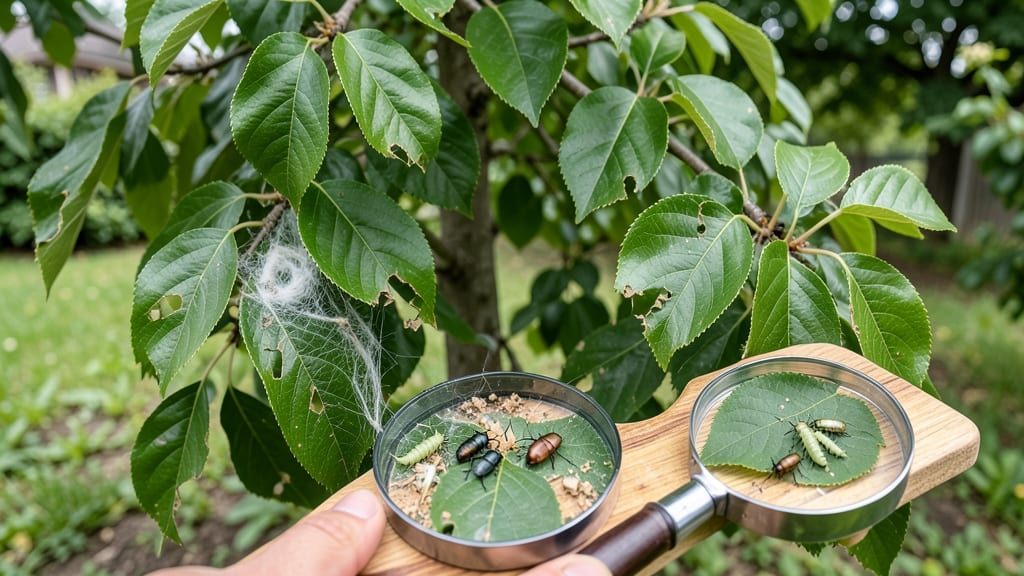
What is eating your cherry tree leaves faster than spring snowmelt? 🌿 The culprits are often smaller—and hungrier—than you think. I’ve spent years tracking down these leaf-munching mysteries, from tiny caterpillars hiding under foliage to deer that treat your tree like an all-you-can-eat buffet.
The good news? Most solutions are organic, fast, and won’t harm your tree (or your conscience).
Here’s the deal: Japanese beetles skeletonize leaves in seconds, tent caterpillars spin silk webs that look like spider nests, and deer leave behind jagged, uneven bites. Mites and aphids, while less obvious, drain leaves of their vibrancy, turning them yellow or speckled.
The key to fixing it starts with identifying the chewer—and we’ll show you exactly how to spot them (and their damage) in minutes.
Once you know who’s at the table, the fixes are simple: neem oil sprays for beetles, pruning out webs for caterpillars, and repellent plants like garlic or rosemary for deer.
I’ve tested these methods in my own backyard, and within 2-3 weeks, the damage stops—and the leaves bounce back greener than ever. No harsh chemicals, just nature’s way of saying, “Not today.”
Season matters too: beetles peak in summer, caterpillars strike in spring, and deer raid year-round. We’ll cover when to act, how to monitor for recurrence, and what to do if the problem keeps coming back. Think of this as your cherry tree’s personal bodyguard guide—because every leaf counts.
Root Causes Of Leaf Damage
When your cherry tree’s leaves start disappearing, it’s usually not a random act of nature—it’s a deliberate feast by hungry pests or a silent battle against fungal invaders. Understanding the why behind the damage is the first step to reclaiming your tree’s health.
Here’s a breakdown of the most common reasons your cherry tree’s leaves are being devoured, explained in clear, science-backed terms.
Insects are the #1 culprits behind leaf loss in cherry trees. Their feeding habits range from surface nibbling to skeletonizing (eating only the soft tissue, leaving veins intact) or even defoliation (stripping entire leaves). Here’s what’s likely gnawing away:
- Japanese Beetles (🐞)
These shiny green-and-copper invaders target over 300 plant species, including sweet and tart cherries.
Adult beetles chew irregular holes in leaves, while larvae (grubs) feed on roots, weakening the tree’s ability to support foliage. Why it happens: Japanese beetles are drawn to volatile organic compounds (VOCs) emitted by stressed or flowering trees—your cherry tree’s scent signals a buffet.
- Tent Caterpillars (🐛)
These fuzzy, silk-web-spinning caterpillars (like the Eastern Tent Caterpillar) defoliate trees in waves. They skeletonize leaves first, then move on to full consumption. Why it happens: They overwinter as eggs on branches, hatching in spring when leaf buds swell—their timing is perfect for a fresh meal.
- Cherry Leaf Spot Fungus (🍄)
Not an insect, but a sneaky fungus! This Ascochyta pathogen causes purple-brown spots with yellow halos, leading to premature leaf drop. Why it happens: Fungal spores survive winter on fallen leaves or buds, then spread via rain splash when conditions are warm (60–80°F) and humid—ideal for spore germination.
Sometimes, the "eating" isn’t literal—it’s indirect damage caused by environmental factors that weaken your tree, making it more vulnerable to pests or disease. Here’s how:
- Water Stress (💧)
Overwatering or drought disrupts nutrient uptake, making leaves lush targets for pests. Why it happens: Stressed trees produce higher levels of sugars in leaves, which attracts sap-sucking insects like aphids or spider mites. Pro tip: Mulch properly (2–4 inches) to retain moisture and regulate soil temperature.
- Nutrient Deficiencies (🌿)
Lack of nitrogen, magnesium, or zinc leads to yellowing (chlorosis) or stunted growth, making leaves easier to chew through. Why it happens: Poor soil structure or pH imbalances (e.g., alkaline soil locks out iron) prevent root absorption. Test your soil! A pH of 6.0–7.0 is ideal for cherry trees.
- Physical Damage (🌪️)
Hail, strong winds, or even lawnmower trauma can tear leaves, creating entry points for bacteria or fungi. Why it happens: Damaged cells release sugars, which ferment and attract pests within 24–48 hours.
Fungal and bacterial infections often mimic insect damage but leave behind distinctive signs. Here’s how they hijack your tree’s leaves:
| Disease | Leaf Symptoms | Why It Spreads |
|---|---|---|
| Powdery Mildew (🍄) | White, talcum-powder-like coating on upper leaves; yellowing underneath. | Spores germinate in warm (70–85°F), dry conditions and spread via wind or touching. Humid nights + dry days = perfect storm. |
| Canker (🌡️) | Sunken, oozing lesions on branches; leaves wilt and drop prematurely. | Fungal/bacterial wounds enter through pruning cuts or cracks. Rain splashes spores onto fresh cuts. |
| Bacterial Leaf Spot (🔬) | Small, water-soaked spots with yellow halos; holes form as spots expand. | Bacteria thrive in wet, warm conditions (60–85°F) and spread via rain or tools. Pruning with disinfected shears is critical. |
Key takeaway: Most leaf damage is opportunistic—pests and diseases target weakened trees. The first step to fixing the problem? Identify the exact culprit (see next section for clues!).
Quick Fixes For Cherry Tree
Now that you’ve identified the troublemaker, it’s time to take action! Whether it’s hungry caterpillars, thirsty aphids, or fungal invaders, these organic, practical solutions will help your cherry tree bounce back—without harsh chemicals. Below, we’ve matched each culprit to its cure, plus prevention tips to keep your tree thriving long-term.
---
🔥 Fix It Fast: 1. Handpick the pests 👨🍳—Early morning is best when they’re sluggish. Drop them into soapy water (1 tbsp dish soap per gallon) to kill them instantly. 2. Burlap bands 🌡️—Wrap the trunk with burlap in late spring to trap emerging adults before they lay eggs. 3. Neem oil spray ✨—Mix 2 tbsp neem oil + 1 tsp mild soap per gallon of water. Spray top and bottom of leaves at dusk to avoid harming bees. 4. Pheromone traps 🎯—Hang gypsy moth traps in early spring to disrupt mating cycles.
💡 Prevention Pro Tips: - Prune 🔪—Remove and destroy heavily infested branches (bag them to stop spread). - Encourage predators 🦋—Ladybugs and birds love caterpillars. Plant nearby flowers like dill or fennel to attract them. - Timing is key ⏰—Apply neem oil before eggs hatch (check for egg masses in fall/winter).
---
🔥 Fix It Fast: 1. Blast them off 💦—Use a strong spray of water (hose end nozzle) to dislodge aphids from tender leaves. 2. Insecticidal soap 🧼—Spray a homemade mix (2.5 tbsp castile soap + 1 quart water) directly on pests. Reapply every 5–7 days. 3. Horticultural oil 🌡️—Smother mites with a light oil spray (like dormant oil) in early spring before they wake up. 4. Introduce ladybugs 🐞—Buy ladybugs online or release them in the evening (they avoid sunlight).
💡 Prevention Pro Tips: - Reflective mulch 🌟—Lay aluminum foil or reflective plastic around the base to confuse mites. - Diatomaceous earth 🏗️—Sprinkle food-grade DE around the tree (reapply after rain). It’s harmless to you but deadly to soft-bodied pests. - Avoid over-fertilizing 🚫—Too much nitrogen attracts aphids. Use a balanced fertilizer (10-10-10).
---
🔥 Fix It Fast: 1. Prune infected leaves ⏰—Remove and dispose of (don’t compost!) diseased foliage immediately. 2. Baking soda spray 🧂—Mix 1 tsp baking soda + 1 tbsp oil + 1 tsp soap per gallon of water. Spray weekly to prevent powdery mildew. 3. Copper fungicide 🛡️—Use an organic copper spray (like Bonide Copper Fungicide) for stubborn infections like anthracnose. 4. Improve airflow 🌬️—Thin out dense branches to reduce humidity, which fungi love.
💡 Prevention Pro Tips: - Water at the roots 💧—Avoid wetting leaves (use drip irrigation or water early in the day). - Mulch properly 🌿—Keep mulch 3–4 inches away from the trunk to prevent moisture buildup. - Resistant varieties 🌱—If fungal diseases are recurring, consider planting resistant cherry varieties like ‘Stella’ or ‘Montmorency’.
---
🔥 Fix It Fast: 1. Milky spore treatment 🌡️—Apply milky spore powder to the soil in early summer. It takes a year to establish but kills grubs for decades. 2. Handpick & drown 👨🍳—Drop beetles into a bucket of soapy water. Do this in the early morning when they’re slow. 3. Neem oil or kaolin clay 🧴—Spray neem oil or mix kaolin clay (like Surround WP) to create a barrier they avoid. 4. Traps (use with caution!) ⚠️—Hang Japanese beetle traps, but place them far from your tree—they can attract more beetles!
💡 Prevention Pro Tips: - Plant repellent flowers 🌸—Marigolds, garlic, and catnip deter beetles. - Remove grubs 🐛—Dig up and destroy white grubs in the lawn (they’re beetle larvae). - Net young trees 🪢—Use fine mesh netting to protect new growth in early summer.
---
🔥 Fix It Fast: 1. Repellent sprays 🧴—Use hot pepper wax or rotten egg spray (ammonia-based) on leaves and trunks. 2. Physical barriers 🪢—Wrap the trunk with hardware cloth or install a tree guard to block chewers. 3. Motion-activated sprinklers 💦—Set up a scarecrow sprinkler to startle animals away. 4. Plant deterrents 🌿—Surround the tree with daffodils, boxwood, or allium—animals hate their smell.
💡 Prevention Pro Tips: - Fence young trees 🏗️—A 4–5 ft tall fence is the most reliable long-term fix. - Harvest fallen fruit 🍒—Remove dropped cherries to reduce temptation. - Check for tracks 🐾—Identify the culprit (deer leave hoof prints; rabbits gnaw cleanly) to tailor your defense.
--- Final Reminder: 🌱 Act fast—the sooner you treat the problem, the less damage your cherry tree will suffer. Most issues are preventable with consistent care, so stay vigilant and enjoy your lush, leafy (and fruit-bearing!) tree all season long!
Frequently asked questions
How do I tell if deer are eating my cherry tree leaves?
Look for jagged, uneven edges on leaves—deer have broad, flat teeth that create irregular bite marks. They also leave behind hoof prints in muddy areas near your tree. Check for cleanly snapped branches too, as deer often browse at shoulder height.
What’s the difference between Japanese beetle damage and tent caterpillar damage?
Japanese beetles skeletonize leaves—they eat soft tissue while leaving veins intact, creating a lace-like pattern. Tent caterpillars, however, spin silk webs and often defoliate entire branches, leaving only bare stems. Check for fuzzy caterpillars in webs if you see heavy damage.
Can I use the same treatment for all pests on my cherry tree?
No—each pest needs a targeted approach. For example, neem oil works for beetles and caterpillars but won’t stop fungal infections. Deer require physical barriers, while aphids respond to insecticidal soap. Always match the solution to the specific chewer or disease you’ve identified.
Will my cherry tree recover if I lose most of its leaves?
Yes, but it depends on the timing and severity. If leaves are lost early in the season, the tree can regrow them. However, late-season defoliation reduces energy storage for next year’s growth. Prune damaged branches to encourage new foliage, and fertilize lightly in spring to support recovery.
How often should I check my cherry tree for pests?
Inspect your tree weekly during peak seasons—spring for caterpillars, summer for beetles, and fall for fungal spores. Early detection is key! Focus on new growth, undersides of leaves, and branch crevices where pests hide. A 10-minute check can save your tree from severe damage.