
Pruning
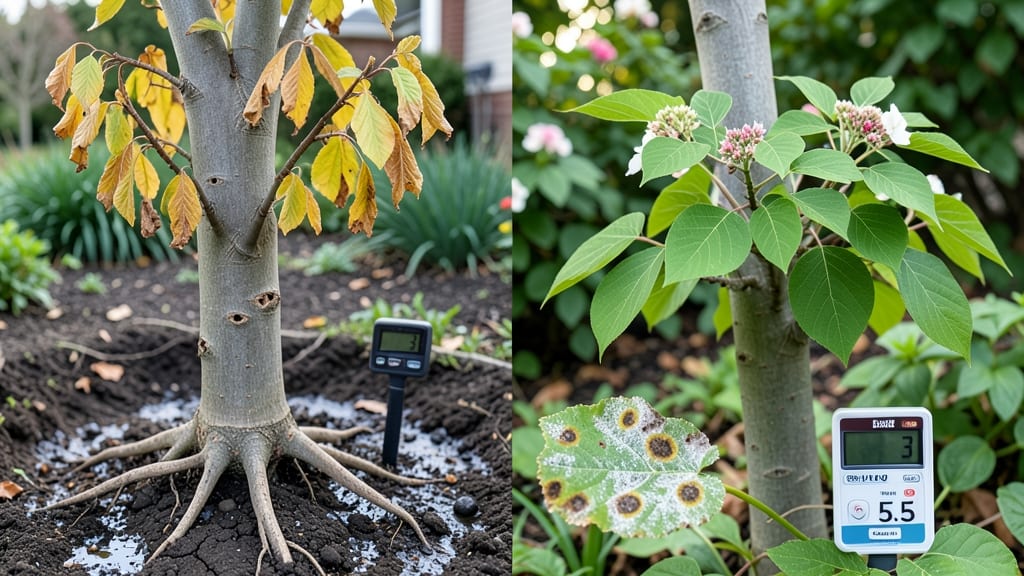
Why is my dogwood tree dying? The slow decline starts with subtle clues—yellowing leaves, sparse blooms, or bark that looks like it's peeling away. 🌳 I've diagnosed five killer issues that turn vibrant dogwoods into sad shadows, and the good news is most can be fixed before it's too late. The first step is matching the symptoms to the problem.
Anthracnose fungus and powdery mildew love the damp spring air that dogwoods crave, creating those telltale dark spots on leaves or white powdery coatings. Borer insects tunnel under the bark, leaving D-shaped holes and sawdust-like frass, while scale insects smother branches with sticky honeydew.
Environmental stress shows up as wilted leaves, cracked bark, or roots that pull away from the soil when you gently tug.
You'll learn to prune infected branches at the right time, apply targeted fungicides before the next rainy season, and adjust watering to prevent root rot. The key is acting fast—once dogwoods lose their leaves permanently or develop large cankers, recovery becomes nearly impossible.
But with these fixes, you can bring yours back to life.
We'll cover prevention too: how to space trees for airflow, choose the right soil mix, and monitor for early signs of trouble. Your dogwood can thrive again—here's how to save it before summer heat makes things worse.
Root Causes Behind Tree Decline
Dogwood trees (Cornus florida) are beloved for their stunning spring blooms and elegant foliage, but they’re also vulnerable to stress—especially when environmental or human factors push them past their limits. Understanding the why behind your tree’s decline is the first step to revival.
Below, we break down the most common culprits, backed by science, so you can diagnose—and fix—the issue before it’s too late.
Dogwoods are particularly susceptible to anthracnose (Colletotrichum gloeosporioides), a fungal disease that thrives in wet, humid conditions.
This pathogen attacks leaves, stems, and even the bark, causing: - Dark, sunken lesions on leaves (often with yellow halos). - Premature leaf drop in spring or summer. - Cankers on stems (raised, dead areas that girdle the tree).
Why it happens: Fungal spores spread via wind, rain, or contaminated tools. Dogwoods weakened by drought, poor soil, or stress are prime targets. Anthracnose is most aggressive in spring and fall, when temperatures hover between 60–80°F (15–27°C) and humidity stays high.
Actionable fix:
- Prune infected branches 6–12 inches below lesions (sterilize tools with 70% alcohol).
- Improve air circulation by thinning dense foliage.
- Apply fungicide (copper-based or propiconazole) in early spring before buds swell.
- Water at the base (avoid overhead sprinkling) and mulch to reduce soil splash.
Dogwoods need consistent moisture but are sensitive to both drought and waterlogging. Here’s how each extreme harms them:
| Issue | Symptoms | Root Cause |
|---|---|---|
| Underwatering | Wilting leaves, crispy edges, brown twigs | Shallow roots dry out; soil stays bone-dry for weeks. |
| Overwatering | Yellowing leaves, root rot, mushrooms | Compacted soil traps moisture; roots suffocate. |
Why it happens:
- Drought: Dogwoods have intermediate water needs—they hate prolonged dry spells, especially in containers or sandy soil.
- Overwatering: Poor drainage (common in clay soil) leads to anaerobic conditions, where roots starve for oxygen. Fungal pathogens like Phytophthora exploit this.
Actionable fix:
- Check soil moisture 2–3 inches deep (should feel like a damp sponge).
- Water deeply 1–2x/week (1–1.5 inches total) during dry spells.
- Aerate compacted soil with a garden fork or gypsum.
- Install a French drain if water pools around the base.
Dogwoods are notoriously sensitive to environmental insults, from scorching sun to mechanical harm. Common triggers include:
- Sunburn: Young trees or those transplanted in summer suffer brown, papery leaf edges when exposed to intense afternoon sun without acclimation.
- Winter injury: Freeze-thaw cycles cause cracked bark or dieback in unprotected trees.
- Lawnmower/string trimmer trauma: Girdling (ringing the trunk with cuts) severs phloem tissue, starving the tree of nutrients.
Why it happens: Dogwoods have thin bark and shallow roots, making them vulnerable to:
- Temperature swings (e.g., sudden heat after frost).
- Physical abrasion from tools or pets digging near the trunk.
- Poor site selection (e.g., planting in full sun without gradual hardening).
Actionable fix:
- Shade young trees with a 50% shade cloth if transplanting in summer.
- Wrap the trunk in burlap or tree guard in winter (remove in early spring).
- Create a 3-foot "no-mow" zone around the base with mulch or rocks.
- Prune damaged bark to healthy tissue (sterilize cuts with pruning sealant).
Dogwoods thrive in well-draining, slightly acidic soil (pH 5.0–6.5). When soil lacks key nutrients or is too alkaline, they show tell-tale signs:
| Deficiency | Symptoms | Fix |
|---|---|---|
| Nitrogen (N) | Pale yellow leaves, stunted growth | Apply balanced fertilizer (10-10-10) in spring. |
| Iron (Fe) | Yellowing between veins (chlorosis) | Add chelated iron or compost. |
| Magnesium (Mg) | Yellow patches on older leaves | Sprinkle Epsom salt (1 tbsp/gal water). |
| High pH (alkaline) | Poor growth, nutrient lockout | Amend soil with sulfur or peat moss. |
Why it happens:
- Compacted or clay soil limits root access to nutrients.
- Over-fertilizing with lime raises pH, making micronutrients like iron unavailable.
- Urban soils are often depleted of organic matter after construction.
Actionable fix:
- Test soil pH (home kits or lab analysis).
- Top-dress with compost (2–3 inches annually).
- Use slow-release, acid-loving plant fertilizer in early spring.
- Avoid synthetic fertilizers high in salt (burns roots).
While dogwoods aren’t as pest-prone as oaks or pines, borers and scale insects can deliver a death blow by:
- Weakening the tree (borers tunnel into vascular tissue).
- Excreting honeydew, which attracts sooty mold (black fungal growth).
Common culprits:
- Dogwood borer (Synanthedon scitula): Larvae create D-shaped exit holes and sawdust-like frass.
- Scale insects: Sticky residue on leaves; trees appear stunted and wilted.
Why it happens:
- Stressed trees (from drought or disease) attract pests.
- Lack of natural predators (e.g., birds, ladybugs) in urban areas.
Actionable fix:
- Inspect bark for sawdust-like frass or tiny holes (borers).
- Apply horticultural oil (dormant season) or systemic insecticide (imazalil) for borers.
- Encourage beneficial insects (e.g., parasitic wasps) with native plants.
- Prune and destroy heavily infested branches (bag and dispose of them).
Revive Your Dogwood Tree Now
If your dogwood tree is showing signs of distress—yellowing leaves, wilting branches, or premature leaf drop—don’t panic! With the right diagnosis and action, you can often nurse it back to health.
Below are practical, step-by-step solutions tailored to the most common causes of decline, plus tips to keep your tree thriving for years. Let’s get your dogwood blooming again! 🌸🌿
Dogwood trees hate soggy roots. If the soil stays waterlogged, fungal diseases like Phytophthora can set in, causing root rot and stunting growth.
🚰 Step 1: Check the Soil
- Dig a small hole (6–8 inches deep) near the base of the tree.
- If the soil smells foul or feels mushy (not crumbly), drainage is the issue.
🌱 Step 2: Improve Drainage
- Raise the tree’s base: Add a 2–3 inch layer of gravel or coarse sand around the root zone (but not touching the trunk).
- Amend the soil: Mix in compost or peat moss to loosen heavy clay soil.
- Install a French drain if your yard floods frequently.
💧 Step 3: Adjust Watering Habits
- Water deeply but infrequently—once a week (or less in winter) is enough unless it’s extremely hot.
- Avoid overhead watering: Use a soaker hose or drip irrigation to keep leaves dry and prevent fungal spread.
💡 Prevention Tip:
> 🌡️ Test your soil with a moisture meter before watering. Dogwoods prefer slightly moist (not soggy) soil.
Dogwoods are drought-tolerant but still need consistent moisture, especially in their first few years. Wilting leaves or crispy edges? It’s time to hydrate.
💦 Step 1: Water Deeply
- Newly planted trees: Water 2–3 times per week for the first year.
- Established trees: Water once a week (or more in extreme heat).
- Soak the root zone: Water until the soil 6–8 inches deep is damp (use a trowel to check).
🌧️ Step 2: Mulch Like a Pro
- Apply 3–4 inches of mulch (wood chips or pine straw) around the base, keeping it 6 inches away from the trunk.
- Mulch retains moisture and regulates soil temperature.
🌿 Step 3: Monitor for Signs
- Morning wilting (leaves perk up in the afternoon) = thirsty tree.
- Premature leaf drop = chronic underwatering.
💡 Prevention Tip:
> ✨ Mulch in spring before summer heat hits to lock in moisture.
Fungal infections like anthracnose (dark spots on leaves) or powdery mildew (white fuzzy coating) weaken dogwoods quickly. Act fast to stop the spread!
🧴 Step 1: Prune Infected Branches
- Remove and destroy (do not compost!) leaves with black spots or powdery residue.
- Sterilize pruners with rubbing alcohol between cuts.
💊 Step 2: Apply Fungicide
- Use a copper-based fungicide (like Copper Soap) or neem oil (organic option).
- Spray early morning or evening to avoid burning leaves.
🌧️ Step 3: Improve Airflow
- Thin out dense branches to allow sunlight and air circulation.
- Space trees 10–15 feet apart when planting new ones.
💡 Prevention Tip:
> 🎯 Water at the base (not overhead) to keep leaves dry—fungi love damp foliage!
Over-pruning or cutting at the wrong time can stress your dogwood, leading to weak growth or death. Follow these golden rules to prune like a pro.
⏰ Step 1: Prune at the Right Time
- Best time: Late winter or early spring (before buds swell).
- Avoid summer pruning—it stresses the tree and invites disease.
🔪 Step 2: Use the Right Cuts
- Remove only dead, diseased, or crossing branches.
- Cut at a 45° angle just outside the branch collar (the swollen area where the branch meets the trunk).
- Never top the tree—this creates weak growth and invites pests.
🌿 Step 3: Sanitize Tools
- Wipe pruners with bleach or alcohol between cuts to prevent spreading disease.
💡 Prevention Tip:
> 🌱 Never remove more than 25% of the canopy at once—this shocks the tree.
Insects like dogwood borers (tunneling larvae) or scale insects (sticky sap) can drain your tree’s vitality. Here’s how to evict them!
🕵️ Step 1: Identify the Pest
- Borers: Small holes in bark, sawdust-like frass.
- Scale: White/brown bumps on stems, sticky honeydew.
- Spider mites: Tiny webs on undersides of leaves.
💦 Step 2: Blast Them Off
- Hose down the tree with strong water pressure (removes scale and mites).
- Scrape borer holes with a screwdriver, then fill with diatomaceous earth.
💊 Step 3: Use Natural Pesticides
- Neem oil (for mites and scale).
- Bacillus thuringiensis (Bt) (for borers—apply in late spring).
- Insecticidal soap (for soft-bodied pests).
💡 Prevention Tip:
> 🔥 Install tree bands (sticky traps) in early spring to catch emerging borers.
Yellow leaves? Stunted growth? Your dogwood might be hungry. Dogwoods need balanced nutrients, but too much fertilizer can burn roots.
📊 Step 1: Test Your Soil
- Use a home soil test kit (available at garden centers) to check pH and nutrient levels.
- Dogwoods prefer slightly acidic soil (pH 5.0–6.5).
🍎 Step 2: Fertilize Smartly
- Spring feeding: Use a slow-release, acid-loving plant fertilizer (like 10-10-10).
- Avoid high-nitrogen fertilizers—they promote leafy growth over flowers.
- Organic option: Spread compost or worm castings around the base in early spring.
💡 Prevention Tip:
> 🌱 Never fertilize in fall or winter—it encourages late-season growth vulnerable to frost damage.
Dogwoods are semi-evergreen and can suffer from winter burn (brown, crispy leaves) or freeze damage if exposed to harsh conditions.
🧤 Step 1: Mulch Heavily
- Apply 4–6 inches of mulch around the base in late fall to insulate roots.
- Use pine straw or shredded bark—they break down slowly.
💧 Step 2: Water Before Freeze
- Give the tree a deep watering in late fall (before the ground freezes) to prevent dehydration.
🌿 Step 3: Shield from Wind
- Plant dogwoods sheltered from harsh winds (e.g., near a fence or building).
- Wrap young trees in burlap if your area gets extreme cold snaps.
💡 Prevention Tip:
> ✨ Choose cold-hardy
Frequently asked questions
Why are my dogwood leaves turning yellow first on the edges?
This classic symptom usually signals overwatering or nutrient deficiency. Dogwoods hate soggy roots—check if your soil feels mushy when squeezed. Yellowing edges can also mean iron deficiency (common in alkaline soil). Test your soil pH and amend with chelated iron or compost if needed.
Can I save a dogwood with black spots on the leaves?
Yes! Those spots are likely anthracnose fungus, but early action helps. Prune infected branches 6 inches below the spots, sterilize tools with rubbing alcohol, and apply copper fungicide in spring. Improve airflow by thinning dense branches—fungi thrive in humid, crowded conditions.
How do I know if my dogwood is dying from pests vs. disease?
Pests leave physical clues: borers create D-shaped holes with sawdust-like frass, while scale insects leave sticky honeydew and white bumps. Diseases show spots, powdery coatings, or cankers. Check bark and leaves closely—pests often target stressed trees first.
Is it too late to save my dogwood if it's lost all its leaves?
Not necessarily! If the branches are still green underneath and bark is intact, it may just be dormant. Water deeply (but don't overdo it) and fertilize with acid-loving plant food in spring. If cankers or dead wood are present, prune those areas immediately. Patience is key—dogwoods can recover surprisingly well.
Why does my dogwood bloom poorly after years of healthy growth?
Poor blooming often stems from too much nitrogen (promotes leaves over flowers) or stress from drought/overwatering. Prune in late winter to encourage new growth, reduce fertilizer to balanced formula, and ensure 6+ hours of sunlight daily. Dogwoods need rest—avoid heavy pruning after flowering.