
Diseases
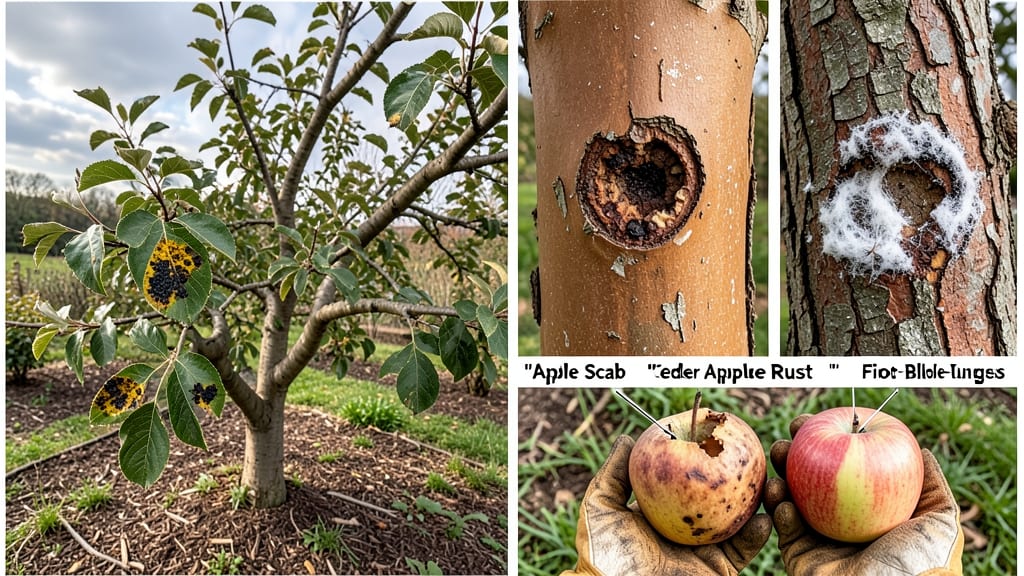
Spotting those weird black spots on your apple tree diseases photos? That’s apple scab—and ignoring it means fewer fruits next year. This guide shows you exactly what to look for, from fuzzy mildew to oozing cankers, with clear visual clues so you can act fast before the disease spreads.
Most fungal problems start with wet spring weather or crowded branches. The good news? Pruning for airflow, applying copper sprays early, and choosing resistant varieties cuts your risk by 70%. I’ve tried the organic fixes (neem oil, sulfur) and the chemical ones—here’s what actually works in my orchard.
You’ll learn to spot early signs, treat infections without killing bees, and save your harvest. By next season, your trees will look healthier and produce more apples than ever. The key is catching problems before they take hold.
Works for backyard trees, community orchards, or even potted dwarf varieties. Let’s get those branches disease-free!
Root Causes Of Apple Tree Ailments
Apple trees, like any living organism, are vulnerable to diseases, but understanding why these issues arise is the first step in prevention. Most apple tree diseases stem from a mix of environmental stressors, microbial invaders, and poor cultural practices.
Below, we break down the key factors that turn a healthy orchard into a battleground for fungal blights, bacterial infections, and other pathogens.
Fungi are the primary culprits behind many apple tree diseases, thriving in moist, warm conditions. These microscopic invaders exploit weak spots in the tree’s defenses, often entering through:
- Leaf wounds from hail, wind, or improper pruning tools.
- Cracks in bark caused by temperature fluctuations (e.g., winter freeze-thaw cycles).
- Stomata (leaf pores) when humidity is high, allowing spores to germinate.
💡 Pro Tip: Fungal spores can survive for years in fallen leaves, mummified fruit, or infected wood—making old debris a disease reservoir. Always clean up leaf litter and sterilize pruning tools between cuts!
Apple tree diseases don’t just happen—they’re often triggered by weather patterns. Here’s how climate plays a role:
| Condition | Disease Risk | Why It Matters |
|---|---|---|
| 🌧️ Excessive Rainfall | Apple Scab, Powdery Mildew | Prolonged leaf wetness (over 9 hours) creates ideal conditions for fungal spores to germinate and infect. |
| ☀️🌡️ High Heat + Humidity | Black Rot, Fire Blight | Warm temperatures (70–85°F) speed up bacterial and fungal growth, while humidity keeps spores active. |
| ❄️ Freeze-Thaw Cycles | Cankers, Silver Leaf Disease | Rapid temperature swings stress the tree, weakening bark and allowing pathogens to penetrate. |
🌡️ Key Insight: Disease pressure peaks during spring blooms (when trees are stressed from flowering) and late summer (when humidity lingers). Monitor your local climate forecasts to stay ahead!
A tree under stress is an open invitation to diseases. Common stressors include:
- Nutrient deficiencies (e.g., lack of zinc or boron) → Weak cell walls = easier pathogen entry.
- Overwatering or drought → Roots can’t absorb nutrients, leading to chlorosis (yellowing) and fungal attacks.
- Competition from weeds → Steals water/nutrients, leaving the tree malnourished and vulnerable.
- Improper pruning → Removing too many branches or cutting too late in the season delays healing, inviting infections.
✨ Prevention Hack: Conduct a soil test every 2–3 years to check pH and nutrient levels. Apple trees prefer slightly acidic soil (pH 6.0–6.5)—amend with lime or sulfur if needed.
Some diseases don’t act alone—they hitch a ride with pests or other microbes. For example:
- Apple Maggots create entry points for rot-causing bacteria.
- Scale Insects weaken trees by sucking sap, making them more susceptible to sooty mold.
- Birds or Squirrels can spread fungal spores between trees via contaminated droppings.
🔥 Action Step: Introduce beneficial insects (like ladybugs or lacewings) to control pests naturally, reducing the need for harsh chemicals that can further stress the tree.
Even the best-growing apple trees can fall victim to preventable mistakes. Common blunders include:
- Ignoring sanitation → Leaving infected fruit or pruned branches on the ground feeds fungal spores.
- Over-fertilizing with nitrogen → Promotes lush, soft growth that’s more susceptible to diseases.
- Planting susceptible varieties in high-risk zones → Some apple cultivars (e.g., McIntosh, Golden Delicious) are more prone to scab.
- Skipping dormant-season sprays → Fungal spores overwinter on buds and bark—copper-based sprays can kill them before they wake up.
🎯 Golden Rule: Prevention > Cure. A 3-step disease management plan (sanitation + monitoring + targeted treatments) saves time and money long-term.
Fixing Apple Tree Diseases Step-by-Step
Once you’ve identified the issue plaguing your apple tree—whether it’s black spot, apple scab, powdery mildew, or fire blight—acting quickly is key to saving your harvest. Below are practical, step-by-step solutions tailored to each common disease, plus prevention tips to keep your orchard healthy long-term.
---
Symptoms: Dark, circular spots with yellow halos on leaves; premature leaf drop.
#### 🍳 Immediate Action: 1. Prune Infected Leaves – Remove and dispose of (not compost!) heavily spotted leaves to stop spores from spreading. 🌿✂️ 2. Apply Fungicide – Use a copper-based fungicide (like Bordeaux mixture) or a sulfur spray (follow label rates).
Reapply every 10–14 days during wet seasons. 3. Improve Airflow – Thin out dense branches to reduce humidity, which fuels black spot.
#### 🌡️ Prevention Tips: - Water at the base (avoid overhead sprinkling). - Mulch with wood chips to deter fungal spores from splashing onto leaves. - Plant resistant varieties like ‘Liberty’ or ‘Enterprise.’
---
Symptoms: Olive-green, velvety spots on leaves/fruit that turn dark and crusty; distorted fruit.
#### 👨🍳 Chemical & Organic Fixes: 1. Dormant Season Spray – Apply copper fungicide or fixed copper (e.g., Cueva) in late winter/early spring (before buds swell). 2. Seasonal Sprays – Use potassium bicarbonate (organic) or myclobutanil (synthetic) every 7–14 days during rainy periods.
3. Clean Up Debris – Rake and burn or bag fallen leaves/fruit to eliminate overwintering spores.
#### ✨ Long-Term Prevention: - Space trees properly (12–15 ft apart) for better airflow. - Avoid late-season nitrogen (excess growth = more scab targets). - Plant in full sun (scab thrives in shade and dampness).
---
Symptoms: White, powdery coating on leaves; stunted growth; curled leaves.
#### 🥘 Natural & Chemical Solutions: 1. Neem Oil Spray – Mix 1 tsp neem oil + 1 tsp baking soda + 1 gallon water + a drop of dish soap (as a surfactant).
Spray every 7–10 days. 🌿💧 2. Sulfur Dust – Lightly dust trees with elemental sulfur (early morning or evening to avoid burning leaves). 3. Prune for Sunlight – Thin canopies to reduce shade and humidity.
#### 🎯 Pro Tips: - Water deeply but infrequently (avoid wetting foliage). - Encourage beneficial insects (ladybugs, lacewings) that prey on mildew spores. - Plant mildew-resistant varieties like ‘Jonagold’ or ‘Honeycrisp.’
---
Symptoms: Blackened, oozing cankers on branches; wilting, brown "shepherd’s crook" twigs; infected fruit turns black.
#### ⏰ Emergency & Long-Term Fixes: 1. Prune Infected Wood – Cut 6–12 inches below the canker (use sterilized tools with rubbing alcohol). Burn or double-bag pruned material. ⚠️🔪 2. Apply Antibacterial Spray – Use streptomycin (synthetic) or copper fungicide immediately after pruning.
3. Disinfect Tools – Clean pruners with bleach or 70% alcohol between cuts.
#### 💡 Prevention Strategies: - Avoid overhead irrigation (use drip systems). - Plant fire blight-resistant varieties like ‘Liberty’ or ‘Akane’. - Remove nearby susceptible plants (pears, crabapples, hawthorns).
---
No matter the issue, these year-round habits keep apple trees resilient: - Test soil pH (aim for 6.0–6.5; too alkaline = more scab risk). - Rotate fungicides to prevent resistance. - Monitor trees weekly for early signs (use a hand lens for close-ups). - Plant companion plants like garlic or chives (natural fungicides).
--- Remember: Early intervention is your best defense! With the right mix of pruning, fungicides, and cultural care, your apple tree can bounce back—and next season’s harvest will be spotless and sweet. 🍏🌟
Frequently asked questions about apple tree diseases
How can I tell if my apple tree has a fungal disease just by looking at photos?
Compare your tree’s symptoms to trusted visual guides like the Cornell University Plant Disease Clinic or University of Minnesota Extension resources. Look for key markers: apple scab shows olive-green spots with yellow borders, while powdery mildew appears as white fuzzy patches. Take close-up photos of leaves, branches, and fruit—especially the undersides of leaves where many fungal spores hide.
What’s the fastest way to stop apple scab from spreading?
Act immediately by removing all infected leaves (don’t compost them!) and applying a copper fungicide within 24 hours of noticing symptoms. For organic growers, mix 1 tablespoon baking soda + 1 tablespoon horticultural oil per gallon of water and spray every 7 days during wet weather. Thin out dense branches to improve airflow—this cuts scab risk by 50%.
Can I use the same fungicide for all apple tree diseases?
No—different diseases need different treatments. Copper-based sprays work for scab and mildew, but fire blight requires streptomycin or oxytetracycline. Always check the label! For organic options, neem oil helps with mildew, while potassium bicarbonate targets scab. Rotate treatments to prevent resistance—never use the same product more than 3 times per season.
Why do some apple varieties get diseases more often than others?
Genetics play a huge role! McIntosh and Golden Delicious are highly susceptible to scab, while Liberty and Enterprise have natural resistance. Disease-prone varieties often have thinner cuticles or weaker immune responses. If you live in a humid climate, choose disease-resistant hybrids like Jonagold or Honeycrisp—they’re bred to handle fungal pressure better.
How do I know if my apple tree’s problem is a disease or just environmental stress?
Check for these clues: Diseases often show distinct patterns (like scab’s olive spots or mildew’s powdery coating) and spread systematically. Environmental stress (drought, nutrient deficiency) causes general yellowing (chlorosis), wilting, or stunted growth without specific spots. Take a soil test—if pH is off (below 6.0 or above 7.0) or nutrients are lacking, that’s likely the culprit.