
Diseases
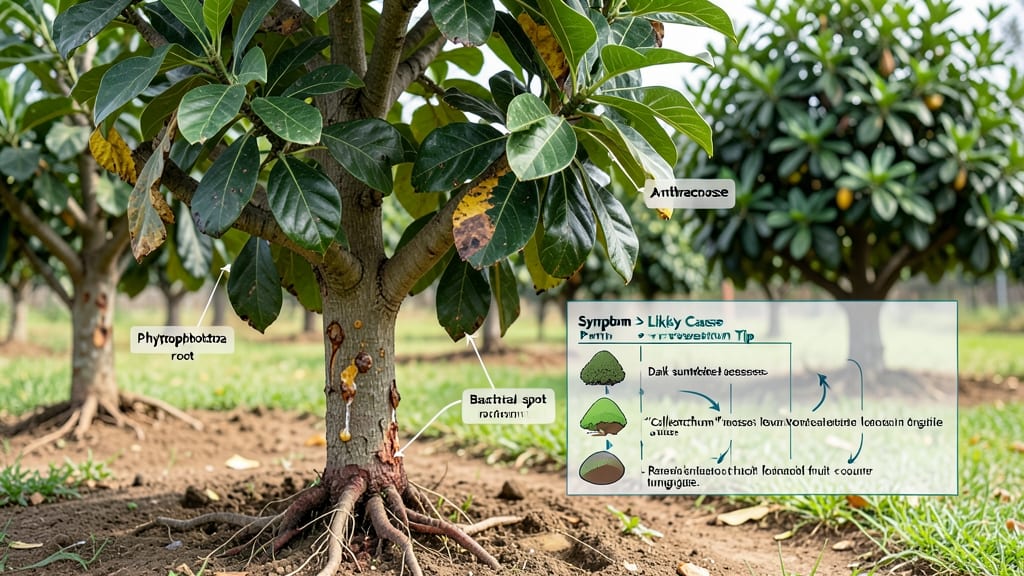
Spotting avocado tree diseases early with the right pictures saves your tree—and your harvest. 🌿 I’ve seen root rot turn a healthy tree into a sad, wilting mess in just weeks, but catching it early means simple fixes can bring it back.
This guide shows you exactly what to look for, from strange leaf spots to oozing stems, so you can act before it’s too late.
Most diseases start with stress—too much water, poor drainage, or weak soil. Fungal infections like Phytophthora root rot thrive in soggy soil, while bacterial issues spread through contaminated tools or wounds.
Even pests like mites can weaken trees enough to invite bigger problems. The key is recognizing the first signs: yellowing leaves, dark spots, or sticky residue on branches.
With the right treatment, you can stop the damage in its tracks. Prune infected branches immediately, improve drainage, and apply organic fungicides or copper sprays as needed. Early action means your tree stays strong, productive, and disease-free for years.
Here’s how to identify the most common threats and their telltale signs. No technical jargon—just clear, actionable steps to keep your tree thriving. Let’s get started!
Root Causes Of Avocado Tree Illnesses
Avocado trees, like all plants, are vulnerable to diseases due to a mix of environmental stress, biological threats, and poor cultural practices. Understanding the why behind these issues helps you take proactive steps to protect your tree.
Below, we break down the key factors that lead to common avocado tree diseases—from soil-borne pathogens to pest infestations—and explain the science behind them.
Fungi thrive in warm, humid conditions and often enter avocado trees through wounds, weak spots, or even healthy tissue. These microscopic organisms release spores that germinate when conditions are right—think overwatering, poor drainage, or high humidity.
- Root Rot (Phytophthora spp.)
This devastating disease spreads when fungal spores—carried by water—invade the roots. Phytophthora loves waterlogged soil, which starves roots of oxygen and creates the perfect breeding ground. Even slight flooding or compacted soil can trigger an outbreak, leading to yellowing leaves, wilting, and eventual tree collapse.
- Anthracnose (Colletotrichum spp.)
Anthracnose fungi target young, tender growth and fruit. They spread via rain splash or contaminated tools, especially in wet, tropical climates. The fungus produces spores that penetrate the tree’s protective cuticle, causing dark, sunken lesions on leaves, stems, and fruit. Poor air circulation (like dense foliage) worsens the problem.
- Powdery Mildew (Oidium spp.)
This fungal disease appears as a white, powdery coating on leaves and stems. It flourishes in shady, humid environments with low airflow. Unlike other fungi, powdery mildew doesn’t need free water to infect—it spreads via wind-blown spores.
Overhead irrigation or dense planting can create the ideal conditions for an outbreak.
Bacteria are often introduced through wounds, contaminated tools, or even insect damage. Once inside, they multiply rapidly, clogging vascular tissues and disrupting nutrient flow. Unlike fungi, bacteria don’t produce spores—they spread via water, wind, or physical contact.
- Bacterial Canker (Pseudomonas syringae)
This aggressive bacterium enters through pruning cuts, storm damage, or insect bites. It thrives in cool, wet conditions and produces a gummy, oozing exudate on branches, which hardens into cankers. The bacteria then blocks water and nutrient transport, causing dieback and even tree death if left untreated.
- Avocado Fruit Rotting (Erwinia spp.)
Soft rot bacteria infect fruit through physical injuries (like hail or bird pecks) or poor handling. They multiply in warm, moist environments, turning fruit mushy and foul-smelling. Overhead irrigation or harvesting wet fruit accelerates spread, making this a common post-harvest issue.
Pests don’t just feed on avocado trees—they create entry points for diseases. Insects like avocado lace bugs, scale insects, and mealybugs weaken the tree by sucking sap, leaving behind sticky honeydew that attracts sooty mold fungi.
Additionally, root-feeding grubs (like white grubs) damage roots, making the tree more susceptible to root rot.
- Sap-Sucking Insects (Lace Bugs, Scale, Mealybugs)
These pests pierce plant cells to feed, injecting toxins that cause yellowing, curling, and premature leaf drop. Their honeydew residue fosters sooty mold, a black fungal growth that coats leaves, further reducing photosynthesis. Drought stress or nutrient deficiencies make trees more attractive to these pests.
- Root-Boring Insects (Avocado Root Weevil, White Grubs)
Larvae of these insects chew through roots, disrupting water and nutrient uptake. Weakened roots struggle to fight off soil-borne pathogens, leading to stunted growth and sudden wilting. Compacted or waterlogged soil exacerbates the problem by limiting root expansion.
Avocado trees are sensitive to their growing conditions. When environmental factors go awry, the tree’s immune system weakens, making it an easy target for pathogens. Here’s how climate and care mistakes set the stage for disease:
| Factor | How It Causes Disease | Actionable Fix |
|---|---|---|
| Overwatering | Soggy soil drowns roots, creating anaerobic conditions where Phytophthora and other fungi thrive. Excess moisture also washes away beneficial microbes, leaving roots vulnerable. | Improve drainage with organic matter (compost, bark chips) and raise planting beds if needed. Water deeply but infrequently. |
| Poor Air Circulation | Dense foliage or tight planting traps humidity, promoting powdery mildew and anthracnose. Stagnant air also slows drying of wet leaves, extending the window for fungal spores to infect. | Prune to open the canopy and space trees 15–20 feet apart. Use fan-assisted drying in greenhouses. |
| Nutrient Imbalances | Deficiencies (especially zinc, copper, or nitrogen) weaken cell walls, making trees more susceptible to pathogens. Excess nitrogen can also promote soft, succulent growth that fungi love. | Test soil annually and amend with micronutrients. Avoid over-fertilizing—stick to a balanced NPK ratio (e.g., 8-3-6). |
| Extreme Temperature Shifts | Sudden cold snaps or heatwaves shock the tree, disrupting photosynthesis and reducing its ability to fight off infections. Cold damage also opens wounds where bacteria can enter. | Mulch heavily in winter to insulate roots. In hot climates, provide afternoon shade and drip irrigation to reduce stress. |
Fixing Avocado Tree Ailments Fast
Avocado trees are resilient, but when diseases strike, quick action is key to saving your harvest. Below, we break down practical solutions for the most common avocado tree diseases—from fungal infections to bacterial blights—plus prevention tips to keep your tree thriving. 🌿💪
🔥 Anthracnose (Brown Spot Disease)
Fix: - Prune infected leaves (burn or dispose of them—do not compost) to prevent spores from spreading.
Focus on removing yellowing or brown spots with dark edges. - Apply copper fungicide (like Bordeaux mixture or copper sulfate) every 2–4 weeks during wet seasons. Follow label instructions for dilution. - Improve airflow by thinning dense foliage or spacing trees 15–20 feet apart.
Prevention: 💡 Space new plants properly to reduce humidity buildup in the canopy. 🌡️ Water at the base (avoid overhead sprinkling) to keep leaves dry.
🍳 Root Rot (Phytophthora) Fix:
- Drainage first! Amend heavy soil with perlite or sand to improve aeration. If your tree is in a pot, add drainage holes and a gravel layer.
- Reduce watering—let the top 2 inches of soil dry out between waterings.
Use a moisture meter if unsure. - Fungicide treatment: Drench the soil with phosphite-based fungicide (e.g., Aliette) every 4–6 weeks during rainy seasons.
Prevention: ✨ Plant in well-draining soil (avocados hate soggy roots!). 🔪 Avoid over-mulching—keep mulch 3–4 inches away from the trunk.
👨🍳 Bacterial Canker (Pseudomonas)
Fix:
- Sterilize pruners with 70% rubbing alcohol or a bleach solution (1 part bleach to 9 parts water) before and after cutting to avoid spreading bacteria.
- Remove infected branches (cut 6 inches below the canker) and dispose of them immediately (do not compost).
- Apply copper bactericide (like Copper Soap) every 2 weeks until new growth appears.
Prevention: 🎯 Avoid wounding the tree—use sharp tools for pruning. 🌧️ Water in the morning to allow foliage to dry quickly.
🥘 Avocado Scab (Elsinoë) Fix:
- Rake up and destroy fallen leaves (they harbor spores).
- Spray with sulfur-based fungicide (e.g., Lime-Sulfur) every 7–10 days during outbreaks.
Start at the first sign of scabby spots. - Thin the canopy to improve air circulation—aim for light penetration to reduce humidity.
Prevention: 💡 Choose resistant varieties like Hass or Fuerte if scab is common in your area. 🍎 Rotate fungicides to prevent resistance buildup.
🔪 Avocado Mites & Spider Mites
Fix:
- Blast mites off with a strong spray of water (early morning works best).
- Use insecticidal soap (like Safer Brand Soap) or neem oil (mix 1 tbsp per gallon of water) and spray every 5–7 days until mites vanish.
- Introduce predator mites (Phytoseiulus persimilis) for organic control—order from garden centers.
Prevention: 🌡️ Keep trees hydrated—mites thrive in dry conditions. 🌿 Encourage beneficial insects like ladybugs with dill or fennel plants nearby.
⏰ Avocado Weevil (Adult & Larvae)
Fix:
- Handpick adults (they’re 1–1.5 inches long with a snout) and drown them in soapy water.
- Apply systemic insecticide (like Imidacloprid) early in the season (follow label rates).
- Check fruit regularly—if you find exit holes, remove the avocado immediately.
Prevention: 🔥 Wrap tree trunks with sticky bands (like Tanglefoot) to trap crawling adults. 🌱 Plant trap crops (like citrus) to lure weevils away from avocados.
- Fertilize properly: Use a balanced 6-6-6 or 8-3-9 fertilizer in early spring (avoid high nitrogen in summer).
- Test soil pH: Avocados prefer 6.0–7.0; amend with lime (to raise pH) or sulfur (to lower it) if needed.
- Monitor regularly: Check undersides of leaves and new growth weekly for early signs of trouble.
Pro Tip: 🌿 When in doubt, isolate infected trees to prevent cross-contamination. A healthy avocado tree is your best defense!
Frequently asked questions
How can I tell if my avocado tree has root rot just by looking at the leaves?
The first sign is yellowing leaves that start at the bottom of the tree and spread upward. Look for wilted, droopy foliage even when the soil is moist, and leaves that fall off easily. Root rot starves the tree of water and nutrients, causing a slow decline. If you gently tug on leaves and they detach with little resistance, that’s a red flag. Check the soil too—if it smells sour or stays soggy for days, root rot is likely the culprit.
Can I save my avocado tree if it already has bacterial canker?
Yes, but act fast! Remove all infected branches 6 inches below the canker and sterilize your tools between cuts. Prune during dry weather to help wounds heal. Apply a copper bactericide every 2 weeks until new growth appears. The key is catching it early—if 50%+ of the canopy is dead, the tree may not recover. Monitor for new cankers regularly.
Why does my avocado tree get powdery mildew even though I water at the base?
Powdery mildew thrives on humidity and poor airflow, not just water on leaves. Even base watering can create damp conditions if your tree is too dense or planted too close to others. Thin out crowded branches to improve circulation, and avoid overhead shade (like tall trees blocking sunlight). If mildew appears, spray with neem oil or sulfur fungicide and water early in the day so leaves dry quickly.
Are there any organic ways to prevent avocado diseases without chemicals?
Start with healthy soil—amend with compost and perlite for drainage. Use mulch rings (but keep them 3–4 inches from the trunk) to regulate moisture. Companion plants like marigolds (repel pests) or basil (deters insects) work well. For fungal issues, mix 1 tbsp baking soda + 1 tsp neem oil + 1 drop dish soap per gallon of water and spray leaves. Copper sprays (organic versions exist) also help prevent bacterial diseases.
How do I know if the dark spots on my avocado leaves are disease or just sunburn?
Sunburn spots are usually dry, crispy, and brown (like paper), often on young leaves exposed to harsh afternoon sun. Disease spots are often soft, wet-looking, or raised, with yellow halos around them. Anthracnose spots are dark with fuzzy edges, while scab spots are rough and scaly. Check the undersides of leaves—disease spores often appear there first. If unsure, snap a photo and compare it to disease databases like UC IPM.