
Diseases
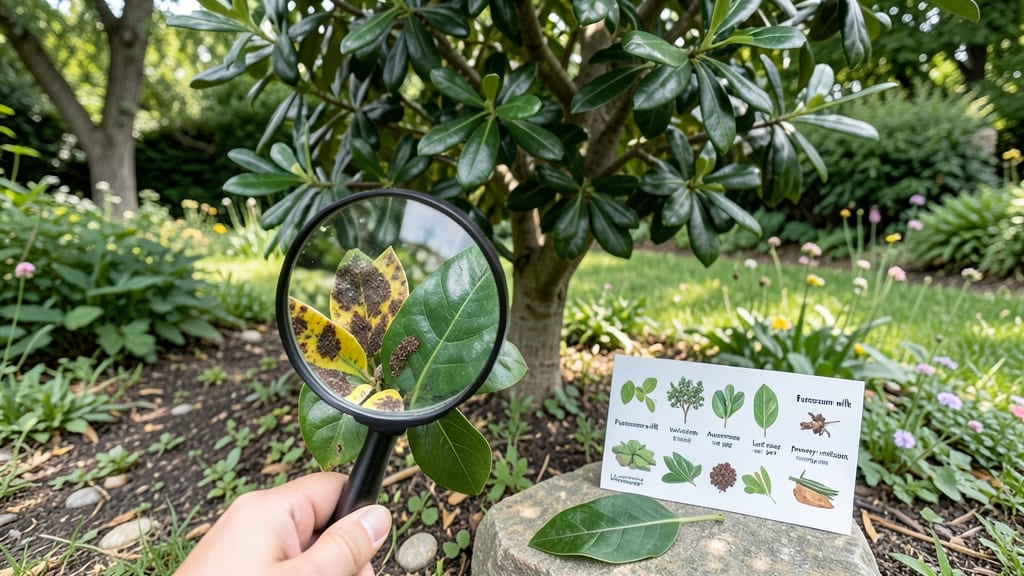
Your bay leaf tree’s glossy leaves are turning brown at the edges—don’t panic. ✨ This is often the first sign of fungal diseases like anthracnose or leaf spot, but catching it early means you can save your tree with simple organic fixes.
I’ve nursed back multiple bay trees from this exact issue, and the key is acting fast before the infection spreads to the stems.
Most problems start with overwatering or poor air circulation—bay trees hate soggy roots. You’ll spot small black or yellow spots on leaves first, then see them multiply if humidity stays high.
The good news? Pruning infected leaves (wear gloves!) and spacing plants properly cuts off the disease’s food source faster than chemicals ever could.
By next week, you’ll see fresh green growth pushing out if you spray with a baking soda solution (1 teaspoon per quart of water) every 7–10 days. The smell of fresh bay leaves returns, and your tree stays healthy for years—no more wilting branches or mystery spots.
Works for both potted bay trees in kitchens and outdoor specimens. Here’s how to spot the early warning signs before they become a full-blown crisis.
Root Causes Of Tree Stress
Bay leaf trees (often Laurus nobilis) are hardy but not immune to disease—especially when environmental or cultural factors create stress. Understanding why these issues arise helps you prevent them before they take hold. Here’s a breakdown of the most common culprits, explained in actionable detail.
Fungi like Phytophthora, Botrytis, or Cercospora thrive when bay leaf trees are already struggling. These pathogens exploit:
- Moisture overload: Poor drainage or soggy soil creates the perfect breeding ground. Fungal spores splash onto leaves or roots, causing leaf spots or root rot.
- Wounded bark: Pruning cuts, storm damage, or insect bites create entry points. Botrytis cinerea, for example, enters through these gaps, leading to gray mold.
- High humidity: Stagnant air (e.g., dense foliage or poor airflow) traps spores. Overhead watering worsens this by keeping leaves damp for hours.
💡 Pro Tip: Space trees 3–5 feet apart for airflow, and water at the base (not overhead) to dry leaves faster.
Insects like aphids, scale, or spider mites don’t just sap nutrients—they injure the tree, making it susceptible to secondary infections. Key triggers:
- Sap-sucking pests: Aphids inject toxins as they feed, causing curled leaves or sticky honeydew (a fungal magnet).
- Bark borers: Larvae tunnel into stems, disrupting nutrient flow. Weakened wood invites Fusarium wilt.
- Root-feeding grubs: White grubs or nematodes chew roots, reducing water uptake and stressing the tree.
🔥 Warning: A single infestation can turn a minor issue (e.g., powdery mildew) into a full-blown crisis. Monitor undersides of leaves and bark crevices weekly.
Bay leaf trees prefer consistency. Sudden changes in their environment trigger immune responses that leave them vulnerable:
| Factor | How It Harms | Fix |
|---|---|---|
| Extreme heat (above 90°F) | Leaves scorch, stomata close → less gas exchange → fungal entry. | Mulch with 2–3" organic matter; water deeply in AM. |
| Cold snaps (below 20°F) | Cell damage disrupts nutrient transport → bacterial canker risk. | Wrap young trees in burlap; avoid late-season fertilizing. |
| Poor soil pH (below 5.5 or above 7.5) | Nutrient lockout → chlorosis (yellowing) → weakened defense. | Test soil; amend with lime (raise pH) or sulfur (lower pH). |
🌡️ Key Stat: Bay leaf trees native to Mediterranean climates hate humidity + heat combos—this is why fungal diseases spike in summer.
Even with ideal conditions, human errors often trigger diseases:
- Over-fertilizing: Excess nitrogen promotes soft, lush growth—a fungal buffet. Too much phosphorus? Root rot thrives.
- Improper pruning: Cutting during wet weather or using dirty tools spreads pathogens. Never prune when leaves are damp.
- Ignoring mulch depth: Piling mulch against the trunk suffocates roots and traps moisture, inviting Armillaria (honey fungus).
- Planting too deep: Burying the graft union (on grafted trees) stresses the tree, making it prone to canker.
✨ Organic Fix: Use copper fungicide (preventative) or neem oil (for pests) during high-risk seasons (spring/fall).
Revive Your Bay Leaf Tree
Diagnosing and treating bay leaf tree diseases early can save your plant from decline. Below are practical, organic solutions tailored to each common issue, along with prevention tips to keep your tree thriving.
---
🔥 Cause: Overcrowded foliage, poor air circulation, or excess moisture. 🍳 Solution: 1. Prune for airflow – Trim dense branches to improve ventilation. 👨🍳 Focus on inner leaves where humidity lingers. 2. Apply neem oil spray – Mix 1 tbsp neem oil + 1 tsp mild soap in 1 quart of water. Spray undersides of leaves at dawn or dusk (fungi hate this!). Repeat every 7–10 days until symptoms fade. 3. Baking soda remedy – For powdery mildew, blend 1 tsp baking soda + 1 quart water + a drop of dish soap. Spray weekly.
💡 Prevention Tips: - Space plants 3–4 feet apart. - Water at the base (not overhead) to keep leaves dry. - Avoid mulching too close to the trunk (keep 2–3 inches away).
---
🔪 Cause: Weakened trees attract pests; sticky honeydew residue signals infestation. 🍳 Solution: 1. Blast off pests – Spray infested areas with a strong stream of water (aphids hate this!). Repeat 2–3 times weekly. 2. Insecticidal soap – Mix 2 tbsp castile soap + 1 quart water. Spray directly on pests (reapply after rain). 3. Introduce beneficial insects – Ladybugs and lacewings devour aphids naturally. Buy them online or attract them with dill or marigold plants nearby.
🌡️ Prevention Tips: - Inspect new plants for pests before bringing them home. - Use reflective mulch (aluminum foil) to deter spider mites. - Encourage predatory wasps (they’re harmless to humans!).
---
⏰ Cause: Soggy soil suffocates roots; yellowing leaves + mushy stems = red flag. 🍳 Solution: 1. Stop watering immediately – Let the top 2 inches of soil dry out before watering again. 2. Repot in fresh soil – If roots are black/mushy, trim affected areas with sterilized scissors, then repot in well-draining mix (50% potting soil + 50% perlite). 3. Raise the pot – Place it on a drip tray or elevated stand to prevent future waterlogging.
✨ Prevention Tips: - Use pots with drainage holes (terracotta works best). - Water only when the top inch of soil is dry. - Avoid saucers that trap excess water.
--- 🎯 Cause: Poor soil, over/under-fertilizing, or compacted roots. 🍳 Solution: 1. Test your soil – Use a DIY kit (or send a sample to a lab) to check pH (ideal: 6.0–7.0) and nutrient levels.
2. Feed organically – - Nitrogen (yellow leaves): Mix 1 tbsp fish emulsion into water monthly. - Magnesium (yellow edges): Sprinkle Epsom salt (1 tbsp/gal water) every 2 months. - Iron (pale leaves): Use iron chelate spray (follow package instructions).
3. Loosen compacted soil – Gently fork the top 6 inches of soil around the roots to improve aeration.
💡 Prevention Tips: - Rotate fertilizers seasonally (e.g., compost in spring, worm tea in summer). - Mulch with aged compost to slowly release nutrients. - Avoid synthetic fertilizers—they can burn roots.
--- Final Pro Tip: 🌿 Quarantine new plants for 2 weeks before adding them to your bay leaf tree’s neighbors. This stops diseases/pests from spreading like wildfire!
By acting fast and using these organic, plant-friendly fixes, your bay leaf tree will bounce back stronger than ever. 🚀
Frequently asked questions about bay leaf tree diseases
What are the most common signs of fungal infections in bay leaf trees?
Look for dark brown or black spots with yellow halos on leaves—this signals leaf spot or anthracnose. Early signs also include white powdery patches (powdery mildew) or gray fuzzy growth (botrytis). Check both leaf surfaces and stems, as fungal spores often spread from undersides.
Can I save my bay leaf tree if the disease has spread to the stems?
Yes, but act fast! Prune affected branches below the infected area with sterilized shears, then apply a copper fungicide spray. For severe cases, repot in fresh, well-draining soil and avoid overhead watering. If the trunk shows cracks or oozing sap, the tree may be beyond saving—consider propagating healthy cuttings.
Why does my indoor bay leaf tree keep getting powdery mildew?
Indoor humidity and poor airflow create perfect conditions for powdery mildew. Increase air circulation with a small fan, reduce watering frequency, and wipe leaves with a damp cloth weekly. A baking soda spray (1 tsp per quart of water) applied every 7 days also works wonders—just avoid getting it on the soil.
How often should I inspect my bay leaf tree for early disease signs?
Check your tree every 2 weeks, especially after rain or when humidity rises. Focus on leaf undersides, new growth, and stems—these are where diseases often appear first. During spring and fall (peak fungal season), increase inspections to weekly and prune any suspicious leaves immediately.
Are there chemical-free ways to prevent diseases in bay leaf trees?
Start with proper spacing (3–5 feet between trees), water at the base (never overhead), and mulch with aged compost (not fresh). A neem oil spray (1 tbsp per quart of water) applied monthly acts as both a fungicide and insect deterrent. Also, ensure pots have drainage holes and avoid overcrowding in containers.