
Blooming
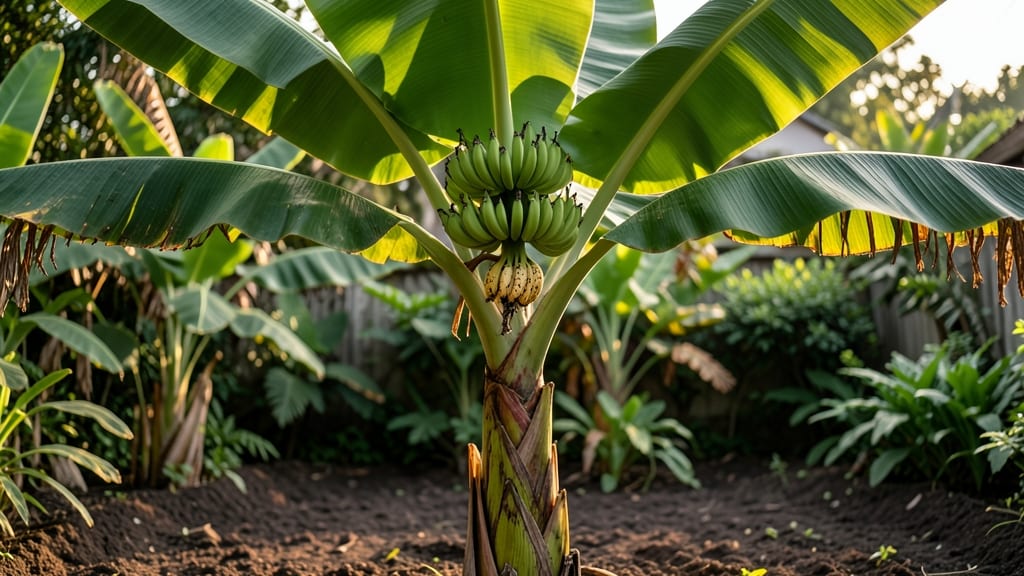
It typically takes a banana tree 9 to 12 months to produce fruit after flowering, though smaller varieties like 'Lady Finger' can bear fruit in as little as 6–9 months, while larger types like 'Cavendish' may need 12–18 months. The timeframe depends heavily on growing conditions like soil quality, sunlight exposure, and water availability.
Understanding this timeline helps you plan for patience and proper care. 🌱 For example, dwarf varieties like 'Lady Finger' are perfect for home gardens because they produce fruit faster, often within a single growing season.
On the other hand, larger banana trees require more time and consistent care to reach maturity. The key to speeding up fruiting lies in providing the right balance of nutrients, sunlight, and water—especially during the flowering stage.
What many gardeners don't realize is that temperature plays a huge role too. Banana trees thrive in warm climates, and even a slight drop in temperature can delay fruiting.
If you're growing bananas in cooler regions, using protective covers or choosing cold-hardy varieties can make a big difference in how quickly you see those first bunches of fruit.
💡 In This Article
- Banana Tree Growth Stages to Fruit Production
- Fastest-Bearing Banana Varieties for Home Gardens
Banana tree growth stages to fruit production
A banana tree's journey from seed to fruit follows four distinct stages, each with specific environmental needs that directly impact how quickly it produces bananas.
First comes the seedling stage, where the plant focuses on root and leaf development—this takes 3-6 months under ideal conditions (warmth, consistent moisture, and partial shade).
The second phase, vegetative growth, lasts 6-12 months as the pseudostem (what looks like a trunk) thickens and the plant prepares for flowering.
The critical flowering stage begins when the plant reaches 3-5 feet tall and is triggered by a combination of temperature (75-85°F), daylight length, and hormonal signals.
Here's where climate makes a huge difference: tropical varieties flower more reliably in 12-hour daylight cycles, while subtropical types may need cooler nights (60-65°F) to initiate blooms.
Once flowering occurs, the fruiting window opens—this is when the 9-12 month countdown begins, as the plant shifts resources from growth to fruit development.
What most gardeners overlook is how water stress during flowering can delay fruiting by 2-4 weeks. Banana trees need 1-2 inches of water weekly during this phase, but too much water can cause root rot.
The final stage, fruit maturation, takes 3-6 months depending on the variety, with dwarf types ripening faster due to their smaller size and higher nutrient efficiency. 🌿 The entire process from seed to fruit can span 18-36 months for larger varieties, but proper care can cut this timeline nearly in half.
Temperature extremes are the biggest enemy of speedy fruiting. Banana trees originate from tropical regions where nighttime temperatures rarely drop below 60°F. In cooler climates, even a single frost can kill the plant, while temperatures below 50°F stunt growth completely.
Sunlight also plays a role: 6-8 hours of direct sun per day is ideal, but too much intense sunlight can cause leaf burn, which diverts energy away from fruit production.
This is why choosing the right variety for your climate is crucial—some, like 'Ice Cream' bananas, tolerate cooler temperatures better than 'Grand Nain' types.
Soil quality matters just as much as climate. Banana trees thrive in well-draining, slightly acidic soil (pH 5.5-7.0) rich in organic matter. Poor soil can extend the vegetative stage by 3-6 months as the plant struggles to absorb nutrients.
A balanced fertilizer with higher potassium content (like 10-10-20 NPK) during flowering helps accelerate fruit development. The key is creating an environment where the plant can focus all its energy on producing fruit rather than compensating for environmental stresses.
Here's a quick breakdown of how environmental factors affect each stage:
- Seedling Stage: Needs 70-80°F and high humidity to establish roots quickly
- Vegetative Growth: Requires 6-8 hours of sunlight and consistent moisture to build pseudostem strength
- Flowering: Triggered by temperature shifts and daylight length—critical window for determining fruiting speed
- Fruiting: Needs stable warmth and balanced nutrients to develop fruit efficiently