
Blooming
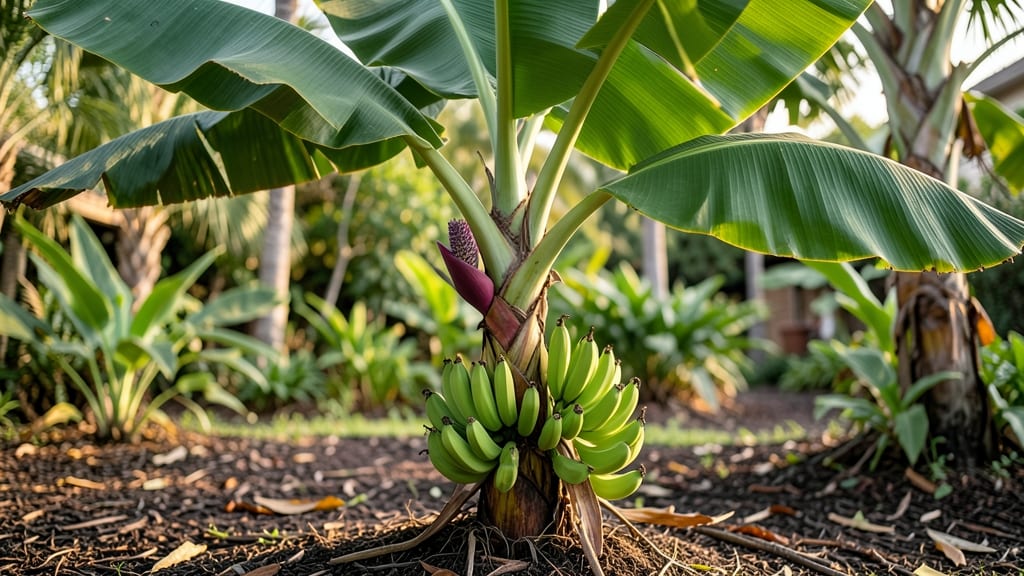
Fruiting a banana tree takes 12-18 months for dwarf varieties but often 3-5 years for standard types—unless you know the science behind faster growth.
If you’ve ever planted a banana tree hoping for sweet, ripe fruit within months—only to wait years—you’re not alone. The real timeline depends on variety, climate, and care, but most gardeners miss the key tricks to speed things up.
Whether you’re growing a 🍌 dwarf banana tree in a pot or a towering tropical giant outdoors, understanding the stages—from leaf sprouts to flowering—helps set realistic expectations. Some varieties fruit in as little as 9 months, while others take nearly a decade without the right conditions.
Here’s what you’ll discover: the fastest fruiting varieties, how to tell if your tree is stalled, and the 5 proven methods to cut years off your wait time—naturally.
Banana tree fruit timeline: realistic growth stages by year
If you planted a banana tree expecting fruit in months, you’re not alone—most gardeners underestimate how long it takes. Banana trees are patient plants, and their 3-5 year timeline to fruit is influenced by variety, climate, and care.
Understanding each growth stage helps you set realistic expectations and optimize conditions for faster results.
From a tiny seedling to a towering 10-30 foot tree bearing fruit, banana trees follow distinct phases. The first 12 months focus on root and leaf development, while years 2-3 build the pseudostem (the tree’s "trunk").
Flowering and fruiting only begin after the plant reaches maturity, which is why dwarf varieties often fruit faster than standard types.
The first year is all about establishing roots and leaves. Your banana tree will grow 3-5 feet tall if planted in ideal conditions—well-draining soil, partial sun, and consistent moisture.
During this phase, avoid transplanting, as root damage can delay growth by months. Focus on organic matter-rich soil and protection from frost, especially in colder zones.
By year two, your tree enters its vegetative growth phase, where it builds the pseudostem (the false trunk made of leaf sheaths). This is when you’ll see dramatic height increases—6-10 feet if given proper care.
The key here is balanced fertilization (equal parts nitrogen, phosphorus, and potassium) to support leaf and stem development. Dwarf varieties like 'Dwarf Cavendish' may start flowering as early as 18 months, while standard types take closer to 3 years.
Flowering signals the final stretch to fruiting, but it’s not a guarantee. The flower spike (banana heart) emerges from the center of the leaves, and if pollinated, fruit will develop in 3-6 months.
This stage requires hand pollination in some cases, especially for indoor-grown trees. Watch for pest infestations like aphids or mites, which can stress the plant and delay fruiting.
Once fruit appears, patience is still key. Bananas take 3-6 months to ripen after flowering, depending on the variety and climate
5 Proven ways to speed up banana tree fruiting (without chemicals)
Banana trees are notoriously patient—most varieties need 3-5 years to produce fruit under ideal conditions. But with the right techniques, you can shave off 1-2 years without synthetic chemicals. The key lies in mimicking their natural tropical environment while optimizing growth phases. Let’s explore science-backed methods to accelerate fruiting naturally.
First, focus on soil nutrition and water consistency, as these directly impact root and leaf development—the foundation for flowering. Banana trees thrive in well-draining, slightly acidic soil (pH 6.0-7.5) rich in organic matter.
Adding compost or banana peel compost tea provides potassium, which is critical for fruit development. Pair this with consistent moisture—never letting the soil dry out completely.
🌱 Numbered Highlights: Banana Tree Fruiting Timeline & Speed-Up Tips
- Year 1: Focus on leaf growth (6-10 large leaves). Use balanced fertilizer (10-10-10) every 4-6 weeks.
- Year 2: Transition to low-nitrogen fertilizer (6-6-6) to encourage flowering. Prune old leaves to redirect energy.
- Year 3: Watch for flowering cues (pseudostem splits). Increase potassium-rich fertilizer to boost fruit set.
- Year 4-5: Harvest time! Expect 1-3 bunches per season if cared for properly.
💡 Pro Tip: Dwarf varieties like 'Dwarf Cavendish' fruit in 2-3 years with optimal care.
Next, pruning strategically can accelerate fruiting. Remove yellow or damaged leaves to reduce competition for nutrients, but never prune more than 20% of the foliage at once. This practice forces the plant to redirect energy toward flowering and fruit development.
Additionally, mulching with straw or wood chips retains soil moisture and regulates temperature, creating ideal conditions for root growth.
Don’t overlook the power of companion planting. Banana trees benefit from nearby legumes like beans or clover, which fix nitrogen in the soil. Avoid planting them near citrus trees, as they compete for the same nutrients.
For indoor growers, place your banana tree near a south-facing window and supplement with a grow light for 12-14 hours daily to mimic tropical sunlight.
Finally, temperature and humidity play critical roles. Banana trees need warmth (70-85°F) and high humidity (60%+). In dry climates, mist leaves daily or use a humidifier.
If growing in USDA Zones 6-9, container-grow your banana tree and move it indoors during winter to protect it from frost, which can stunt growth permanently.
With these 5 proven methods, you’ll create the perfect environment for your banana tree to fruit 1-2 years faster—all while keeping your garden chemical-free. Patience and consistency are key, but the reward of homegrown bananas is worth every effort! 🍌