
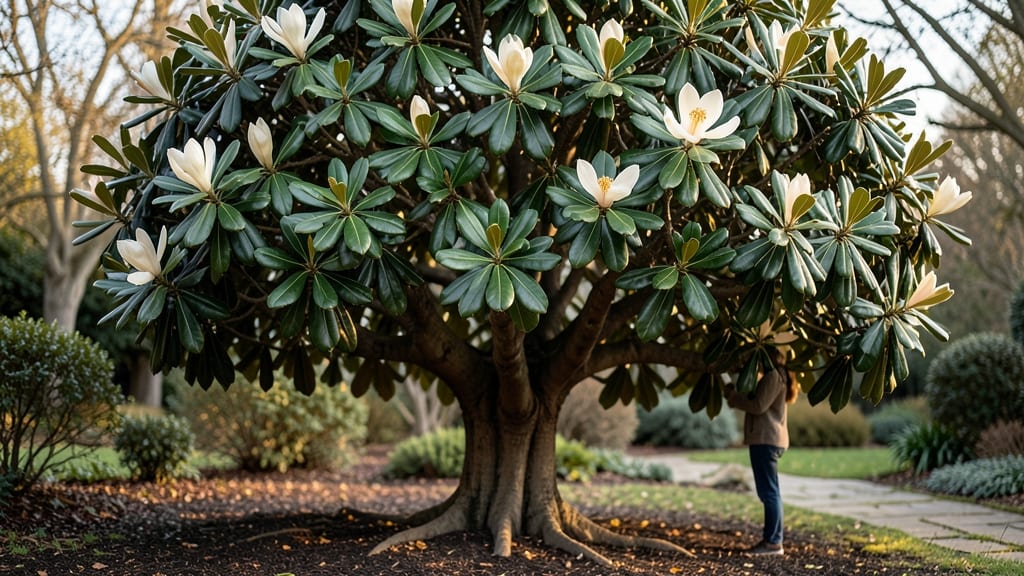
Magnolia Tree Height and Width: Fastest-Growing Varieties and Their Space Needs

Pruning

Magnolia Tree Height and Width: Fastest-Growing Varieties and Their Space Needs

Magnolia trees grow to heights and widths that can completely transform your landscape — from a towering 80-foot giant to a dainty 8-foot dwarf that fits snugly in a small yard.

If you're dreaming of a stunning magnolia tree but worried about whether it’ll dwarf your landscape, you’re not alone. Some varieties grow taller than a three-story building while others stay compact, making space planning critical before planting.

Choosing the right type means balancing your yard’s size with the tree’s mature dimensions. A Magnolia stellata, for example, stays under 20 feet tall, while a Magnolia grandiflora can stretch to 60 feet — a difference that affects everything from pruning to nearby structures.

Below, I break down the fastest-growing varieties by height and width, plus how to pick the perfect fit for your space without sacrificing beauty or long-term growth.

Magnolia Tree Height Range
10 ftto80 ft
0 ft 3 ft 6 ft 9 ft 12 ft
🌱 Tall to Very Tall to Very Tall Tree

Magnolia tree height and width by variety: fastest-growing species at a glance

Choosing the right magnolia variety depends on your space—whether you have a sprawling backyard or a cozy urban courtyard. Some magnolias grow 3 feet per year while others take decades to reach maturity.

Understanding these differences helps you avoid planting a 60-foot giant where a 10-foot dwarf would thrive. Let’s explore the fastest-growing varieties first, so you can plan your landscape with confidence.

Fast growth doesn’t always mean reckless expansion. Many speedy magnolias maintain a compact shape or controlled spread, making them ideal for smaller yards. Below, I’ve ranked the top 10 varieties by growth rate, including their mature height, width, and whether they’re evergreen or deciduous.

This comparison will help you match your magnolia to your space—whether you’re designing a city garden or a rural estate.

Pro Tip: Always check your variety’s root spread—it’s often twice as wide as the canopy. Planting too close to sidewalks or foundations can lead to costly repairs down the line.

How to choose the right magnolia for your space: height and width considerations

Selecting the perfect magnolia tree for your landscape starts with understanding its mature height and spread. A 20-foot variety planted too close to your house could block sunlight or damage foundations, while a dwarf magnolia might get lost in a large yard.

My top priority is matching the tree’s growth habit to your space—whether that’s a small urban patio or a rural acreage.

Start by measuring your planting area and considering nearby structures. A Southern magnolia (Magnolia grandiflora) can reach 80 feet tall and 30 feet wide, making it ideal for spacious properties but a poor fit for city gardens.

Meanwhile, star magnolia (Magnolia stellata) stays under 15 feet tall and 10 feet wide, perfect for smaller yards or container growing.

🌱 Key Takeaway: Magnolia Size Guide

Variety Type Mature Height (ft) Mature Width (ft) Growth Rate (ft/year) Best For
'Jane' Magnolia Deciduous 15-20 12-15 2-3 Small yards, containers
'Black Tulip' (Magnolia liliiflora) Deciduous 10-15 8-12 1.5-2.5 Urban gardens, patios
'Ann' Magnolia Deciduous 12-15 10-12 2-3 Foundation planting
'Elizabeth' Magnolia Deciduous 20-25 15-20 1.5-2 Medium yards, privacy screens
'Little Gem' (Southern Magnolia) Evergreen 20-25 10-12 1.5-2 Narrow spaces, streetscapes
'Yellow Bird' (Magnolia liliiflora) Deciduous 12-15 10-12 2-3 Containers, small landscapes
Variety Mature Height Mature Width Best For
Southern Magnolia (M. grandiflora) 60–80 ft 20–30 ft Large estates, privacy screens
Star Magnolia (M. stellata) 10–15 ft 8–12 ft Small yards, containers, urban gardens
Saucer Magnolia (M. × soulangeana) 20–25 ft 15–20 ft Medium yards, focal points
Little Gem® (M. grandiflora cultivar) 15–20 ft 8–12 ft Narrow spaces, small lots

Pro Tip: Always check the root spread—it’s often 1.5x the canopy width. Plant at least 10 feet from structures to avoid root damage. 🌳

Next, consider your climate zone and sunlight exposure. Tall magnolias like Southern magnolia thrive in USDA Zones 7–10 with full sun to partial shade, while star magnolia prefers Zones 4–8 and tolerates morning sun with afternoon shade.

If your yard has limited sunlight, opt for a dwarf variety like Black Tulip® (M. stellata), which blooms beautifully in partial shade.

Pruning plays a critical role in controlling height and width. For young magnolias, I recommend structural pruning in late winter to shape the tree and remove weak branches.

Avoid heavy pruning during blooming season (spring), as this can reduce flower production. For overgrown magnolias, prune in early summer to encourage compact growth.

Don’t forget about root competition. Magnolias have aggressive root systems, so plant them 10–15 feet away from other trees or shrubs. If space is limited, choose a container-friendly variety like Jane® (M. × loebneri), which stays under 12 feet tall and 8 feet wide.

Always mulch around the base to protect roots and retain moisture.

Finally, visualize the long-term impact of your magnolia’s size. A 25-foot tree planted near a driveway could block visibility or require expensive pruning later. Use a sketch or app to map out mature dimensions before planting. My golden rule: Measure twice, plant once—especially with magnolias! ✂️

★★★★★4.8(6 reviews)
Categories Pruning