
Trees
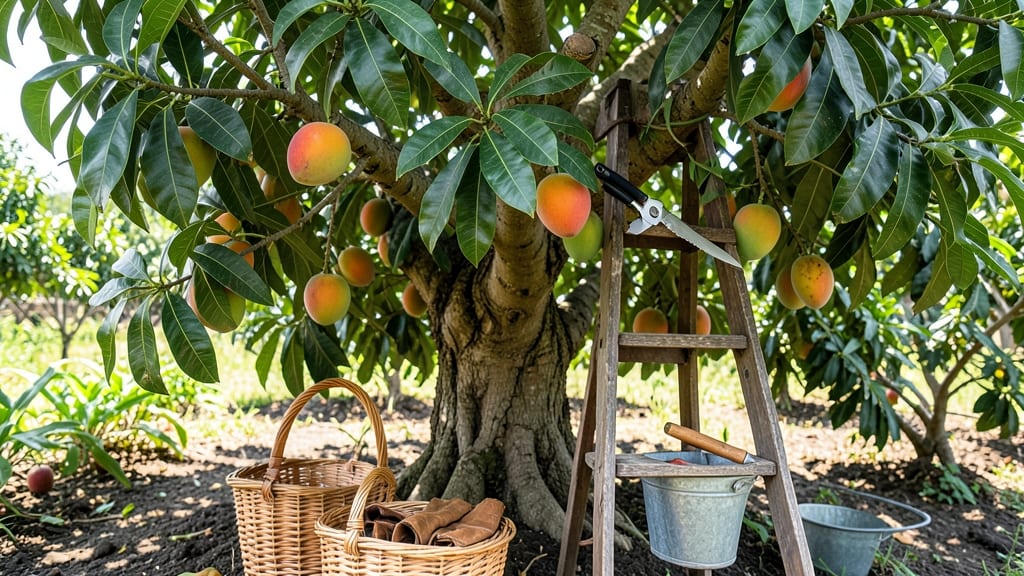
Harvesting your 🥭 mango tree at the right moment means the difference between a mealy, bland fruit and one bursting with sweet, juicy perfection.
Picture this: you’ve waited months for those vibrant mangoes to ripen, but when you finally slice into one, it’s still hard and underwhelming. That’s the frustration of picking too early—or worse, waiting too long.
The key? Learning the exact signs of peak ripeness, from color shifts to that telltale give when you gently press the fruit.
In tropical regions like USDA Zones 10-11, mangoes typically ripen between late spring and summer, but the timing varies by variety. Whether you’re in Florida or Hawaii, knowing when to pluck them—and how to ripen them properly afterward—can save you from wasted harvests.
I’ll walk you through the science behind it, so you never miss the sweet spot again.
From testing firmness to storing your harvest for weeks, this guide covers everything you need to turn your mango tree’s bounty into a year-round treat. Let’s make sure every bite is worth the wait!


How to determine the best time to harvest mangoes for maximum ripeness
Picking mangoes at the perfect moment means the difference between a mealy, underripe fruit and a sweet, juicy masterpiece. Unlike some fruits that ripen on the vine, mangoes often reach their peak flavor after harvest.
But knowing when to pluck them is an art—and I’ve cracked the code through years of trial and error in my own backyard orchard.
Timing your harvest depends on three key factors: visual cues, tactile tests, and aromatic signals. Each mango variety has its own rhythm, but these universal signs will help you nail the window.
For example, my Haden mangoes always signal readiness with a deep red blush, while Keitt varieties lean toward golden hues. Let’s break down the science behind each clue.
The color change is your first clue, but don’t rely on it alone—some varieties like Kent mangoes stay green until nearly ripe. Instead, combine color with the firmness test.
Press your thumb near the stem; if the fruit gives slightly (like a ripe avocado), it’s ready. Overripe mangoes feel mushy, while underripe ones resist pressure entirely.
Here’s a pro tip: Twist the fruit at the stem while holding the branch. A ripe mango will detach with minimal effort—almost like it’s begging to be picked. If you feel resistance, wait another 3–5 days.
I once missed this cue with my Tommy Atkins mangoes and ended up with a batch that was too firm to ripen properly indoors.
Never underestimate the power of aroma. A ripe mango releases a sweet, almost floral scent near the stem. If you catch a whiff of fermentation (like overripe apples), the fruit’s past its prime.
In my experience, this scent-based check is the most reliable for tropical varieties like Alphonso mangoes, which can be tricky to time visually.
Regional climate plays a huge role in harvest windows. In USDA Zones 10–11 (tropical Florida, Hawaii, Southern California), mangoes ripen year-round, with peaks from April to September.
But in subtropical zones (like parts of Texas or Australia’s Gold Coast), harvests align with warmer months—typically late spring to early summer. My mature mango tree in Zone 10 produces fruit in two flushes: one in May and another in August.
For gardeners in cooler climates, consider container-grown mangoes or dwarf varieties like Cogshall, which ripen earlier. I’ve successfully grown Cogshall mangoes in Zone 9 by moving pots indoors during winter.
The key is monitoring nighttime temperatures—mangoes need warmth to ripen properly, so avoid harvesting when temps dip below 55°F (13°C).
One common mistake? Harvesting based on calendar dates instead of fruit signals. I’ve seen gardeners pick mangoes in June because “that’s when they usually ripen,” only to find them rock-hard.
Always prioritize the fruit’s cues over assumptions. If you’re unsure, pick a few test mangoes and let them ripen indoors—you’ll quickly learn your tree’s rhythm.
Protect your harvest by using soft cloths when handling mangoes. Bruises speed up spoilage, so avoid dropping fruit or storing them in direct sunlight post-harvest. Once picked, mangoes continue ripening at room temperature—place them in a paper bag with a banana (bananas release ethylene gas) to accelerate the process.
Within 3–5 days, you’ll have perfectly sweet mangoes ready to enjoy.
🥭
Mango ripening after harvest: indoor vs. outdoor methods for perfect sweetness
Once you've harvested your mangoes at peak maturity, the real challenge begins—ripening them properly to unlock that perfect sweetness. Unlike some fruits that ripen on the tree, mangoes often need a little help after picking.
The key lies in balancing ethylene exposure, temperature control, and humidity levels to avoid common pitfalls like over-ripeness or uneven sweetness.
Mangoes produce ethylene gas naturally as they ripen, but the process accelerates under specific conditions. Indoor ripening offers more control, while outdoor methods rely on natural warmth. Both approaches have trade-offs depending on your climate and available space.
Let’s break down the best strategies for each method to ensure your mangoes reach their sweetest potential.
Indoor Ripening
Pros
- ✅ Controlled temperature (70-75°F ideal)
- ✅ No pest risks from outdoor insects
- ✅ Faster ripening with ethylene sources
Cons
- ❌ Requires monitoring to avoid over-ripeness
- ❌ Limited space for large batches
- ❌ Ethylene sources (like apples) may not be ideal
Outdoor Ripening
Pros
- ✅ Natural warmth speeds up ripening
- ✅ No equipment needed (just sunlight)
- ✅ Better for large batches in warm climates
Cons
- ❌ Pest attraction (birds, insects)
- ❌ Uneven ripening in fluctuating temps
- ❌ Risk of over-ripeness in high heat
For indoor ripening, place your mangoes in a paper bag with a banana or apple to boost ethylene levels. Store them in a warm, dark spot like a pantry or closet.
Check daily—ripe mangoes should yield slightly to gentle pressure and smell sweet near the stem. If they soften too quickly, move them to the fridge to slow ripening.
Outdoor ripening works best in tropical or subtropical climates where temperatures stay between 75-85°F. Place mangoes in a shaded, well-ventilated area like under a tree or on a porch.
Avoid direct sunlight to prevent sunburn or uneven ripening. In cooler climates, use a greenhouse or sunny windowsill for consistent warmth.
Regardless of method, avoid refrigerating unripe mangoes—this halts ripening entirely. Instead, let them ripen at room temperature first. Once ripe, they’ll keep in the fridge for 3-5 days to maintain freshness. For long-term storage, consider freezing or drying slices to preserve flavor beyond their natural shelf life.
Experiment with both methods to find what works best for your mango variety and climate. With the right approach, you’ll enjoy mangoes at their peak sweetness all season long. 🥭