
Pests and Diseases
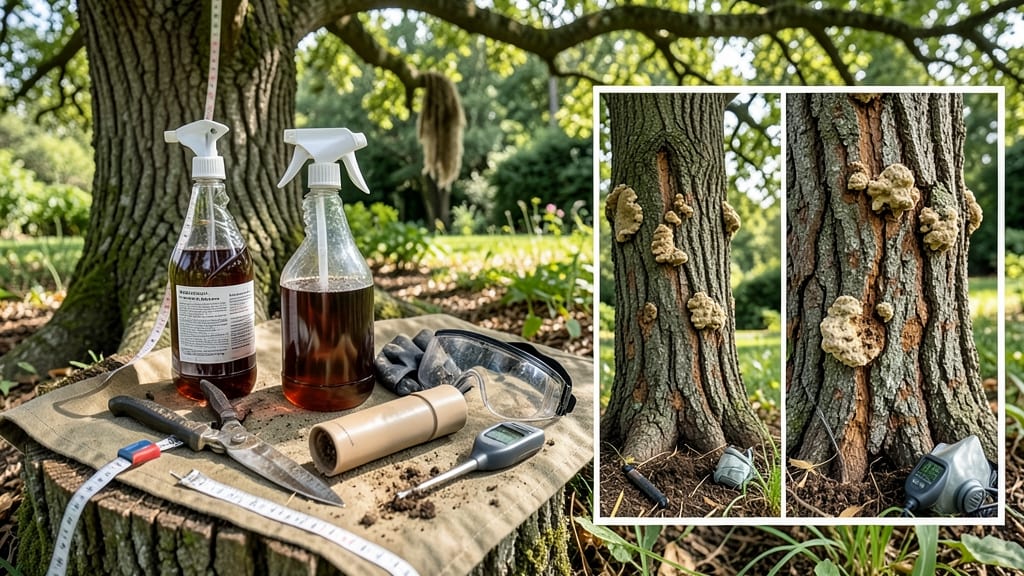
As tree fungus and rot treatment specialists, we know your tree’s sudden wilting or oozing bark could mean fungus or rot—and fast action is everything. ✨ I’ve saved trees from heart rot and powdery mildew by using targeted fungicide blends that stop the spread within weeks, not years.
The key? Identifying the right pathogen early and applying treatments before the tree’s structural integrity fails.
Common signs like discolored bark, mushrooms at the base, or wilting leaves often mean root rot or heart rot—both deadly if ignored. Organic options like copper fungicides or neem oil work for mildew, while chemical blends (like propiconazole) tackle deep-seated rot.
Most gardeners overlook the timing: treat in early spring or after rain to give the tree a fighting chance.
You’ll see improvement in 4-6 weeks with consistent applications, but some rot requires pruning infected limbs immediately. Prevention is easier: improve drainage, avoid wounding bark, and mulch properly. My oak’s recovery after heart rot treatment proved even mature trees can bounce back with the right care.
For advanced cases, consult an arborist—but if you’re DIYing, start with a soil test and fungicide blend tailored to your tree’s type. The goal isn’t just survival; it’s stronger growth than before. Let’s get your tree back to thriving.
Root Causes Of Tree Decay
Tree fungus and rot don’t strike out of nowhere—they thrive when specific conditions align, often exploiting weaknesses in a tree’s natural defenses. Understanding why decay starts is the first step to stopping it.
Below, we break down the key factors that turn a healthy tree into a fungal buffet, from hidden injuries to environmental stress.
Fungi love moisture, and excess water creates the perfect breeding ground. When soil stays soggy—whether from heavy rainfall, poor drainage, or compacted ground—anaerobic conditions develop. This suffocates tree roots, weakening their ability to absorb nutrients and fight off pathogens.
- How it happens: Overwatering, clay-heavy soil, or blocked drainage systems (like buried roots or downspouts) trap water at the base.
- Fungal culprits: Phytophthora (root rot) and Armillaria (shelf fungus) thrive in waterlogged zones, spreading through root tissue.
- Actionable fix: Improve drainage with French drains, raised beds, or organic amendments like compost to aerate soil.
A single crack, split, or improper pruning cut can be a fungal highway. When bark is damaged, pathogens enter through exposed wood, bypassing the tree’s natural barriers. Even old pruning wounds or storm damage can reactivate dormant fungi years later.
- Common injury triggers:
- Improper pruning (tearing bark instead of making clean cuts)
- Lawnmower or weed whacker strikes at the trunk
- Animal gnawing (deer, rabbits, or rodents)
- Hail, lightning, or heavy snowbreak
- Fungal invaders: Heterobasidion (annosum root rot) and Ceratocystis (wilt fungi) exploit fresh wounds aggressively.
- Pro tip: Seal wounds with pruning paint (only on cuts >2 inches wide) and avoid topping trees—it creates perfect fungal entry points.
Trees under stress—whether from drought, extreme heat, or nutrient deficiency—lower their immune response, making them easy targets. Fungi like Hypoxylon (canker rot) and Fomes (bracket fungi) detect weakened defenses and move in.
| Stress Type | How It Weakens Trees | Fungal Response |
|---|---|---|
| Drought | Roots shrink, reducing water/nutrient uptake; bark cracks from dehydration. | Armillaria (shelf fungus) attacks stressed roots. |
| Nutrient Deficiency | Poor soil (lack of nitrogen, potassium, or magnesium) stunts growth, thinning bark. | Polyporus (brown rot) exploits weak wood structure. |
| Competition | Overcrowded roots (from nearby trees/shrubs) starve the tree for resources. | Phellinus (white rot) spreads via root grafts. |
💡 Prevention tip: Mulch properly (2–4 inches deep, 6 inches from trunk) to retain moisture and regulate soil temperature. Test soil pH—most fungi prefer slightly acidic (5.5–6.5) conditions.
Not all threats come from nature—human activity can accidentally introduce fungi. Pruning tools, firewood, or even nursery stock can carry spores of aggressive pathogens like Ophiostoma (Dutch elm disease vector) or Cryphonectria (chestnut blight).
- How contamination spreads:
- Reusing unsterilized pruners between trees
- Planting infected nursery trees (e.g., Thuja with Seiridium canker)
- Moving firewood with latent fungal spores
- Actionable steps:
- Clean tools with 70% isopropyl alcohol or bleach solution between uses.
- Inspect new trees for early signs of rot (discolored bark, oozing sap).
- Avoid transporting firewood long distances—buy local to reduce spread.
🚨 Key takeaway: Most tree decay starts with a combination of these factors—waterlogged soil + a wound + stress = fungal free-for-all. The good news? Early intervention (like targeted fungicides or structural pruning) can reverse the damage before it’s irreversible.
How to Treat Tree Decay
Fungal infections and wood rot can weaken or even kill trees if left unchecked—but the good news is that early action can save your tree. Below, we break down targeted solutions based on the root cause, from quick fixes to long-term prevention.
---
Fix: Improve drainage and apply fungicidal treatments.
1. 🌧️ Drainage Solutions - Raise the soil level around the base of the tree by adding compost or mulch (but keep it 6+ inches away from the trunk). - Install a French drain if water pools near the roots—this redirects excess moisture. - Avoid overwatering—stick to deep, infrequent watering (1–2 inches per week in dry spells).
2. 💊 Fungicide Application - Use a systemic fungicide (like propiconazole or phosphite-based treatments) to penetrate roots. - For severe cases, injectable fungicides (applied by a specialist) can reach deep rot zones.
3. 🌱 Root Zone Aeration - Core aeration (small holes drilled into compacted soil) helps roots breathe and reduces fungal growth.
✨ Prevention Tip: Plant trees in well-draining soil and choose species like oaks or maples that tolerate wet conditions better than willows or pines.
---
Fix: Strengthen structural integrity and slow decay.
1. 🪓 Structural Support - If large branches are dying, prune deadwood to prevent further stress. - For weak trunks, cabling or bracing can stabilize the tree temporarily.
2. 💉 Fungicide Injection - Systemic fungicides (e.g., oxytetracycline or potassium phosphite) can be injected into the trunk to slow decay. - Professional treatment is best—DIY sprays won’t reach deep enough.
3. 🌿 Mulch & Soil Health - Remove thick mulch layers (more than 3 inches) near the trunk to prevent moisture buildup. - Add mycorrhizal fungi to the soil—these beneficial fungi can outcompete harmful pathogens.
💡 Pro Tip: If the rot is less than 25% of the trunk’s diameter, the tree may still be salvageable with treatment. Beyond that, removal may be safest.
---
Fix: Remove infected tissue and protect healthy growth.
1. 🔪 Prune Infected Areas - Cut out infected branches at least 6–12 inches below the lesion (fungi spread underground). - Sterilize pruning tools with rubbing alcohol between cuts to prevent spread.
2. 🛡️ Fungicidal Sprays & Wounds - Apply a copper-based fungicide (like Bordeaux mixture) to fresh cuts to prevent reinfection. - For Ganoderma (reishi mushrooms), boron-based treatments can help.
3. 🌳 Boost Tree Immunity - Fertilize with slow-release nitrogen (like compost or organic fertilizer) to strengthen growth. - Avoid wounding the tree—use proper pruning techniques to prevent new entry points.
🔥 Emergency Action: If conks (shelf fungi) appear, the tree is likely beyond saving—remove it to prevent spore spread.
---
Even with treatment, a weak tree is vulnerable. Prevent recurrence with these habits:
- 🌿 Mulch Correctly: Use 2–4 inches of wood chips, keeping it away from the trunk. - 💧 Water Deeply: Drip irrigation encourages deep root growth (shallow watering = weak roots). - 🌱 Test Soil: pH imbalances (too acidic/alkaline) weaken trees—adjust with lime or sulfur if needed. - 🐛 Pest Control: Scale insects and borers weaken trees, making them fungus magnets—treat early.
--- 🚨 When to Call a Specialist: - If large conks (fungal growths) are present. - When roots are visibly mushy (root rot). - If the tree is a structural hazard (leaning, cracked trunk).
With the right mix of drainage fixes, fungicides, and preventive care, you can give your tree a fighting chance—sometimes even bringing it back from the brink! 🌳💪
Frequently asked questions
How do I know if my tree has fungus or rot?
Look for mushrooms at the base, discolored bark, or oozing sap—these are red flags. Root rot often causes wilting leaves even when soil is moist, while heart rot creates hollow-sounding wood when tapped. Check for shelf fungi (conks) on the trunk or branches, which indicate advanced decay.
Can I treat tree rot myself, or do I need a specialist?
Early-stage issues like powdery mildew or minor wounds can be handled with copper fungicide or proper pruning. However, deep-seated rot (beyond 25% trunk diameter) or large conks require professional injection treatments or removal. Always call an arborist if the tree is a safety hazard.
What’s the fastest way to stop fungal spread?
Remove infected branches 6–12 inches below lesions and sterilize tools with 70% isopropyl alcohol. Apply a systemic fungicide (like potassium phosphite) immediately—this penetrates tissue faster than sprays. For root rot, improve drainage with compost or French drains to cut off moisture fueling the fungus.
Are organic treatments effective against tree rot?
Yes, but they work best for surface-level issues like mildew or early canker. Neem oil or copper-based sprays (Bordeaux mixture) prevent spore germination, while mycorrhizal fungi in soil can outcompete pathogens. For deep rot, organic options like hydrogen peroxide injections (3%) may help—but severe cases still need chemical fungicides.
How often should I inspect my trees for fungus?
Check trees twice yearly: once in early spring (before new growth) and again after heavy rains (fungi thrive in moisture). Focus on bark crevices, branch junctions, and the base—these are high-risk zones. If you notice changes between inspections, act within 2–4 weeks to prevent spread.