
Pests
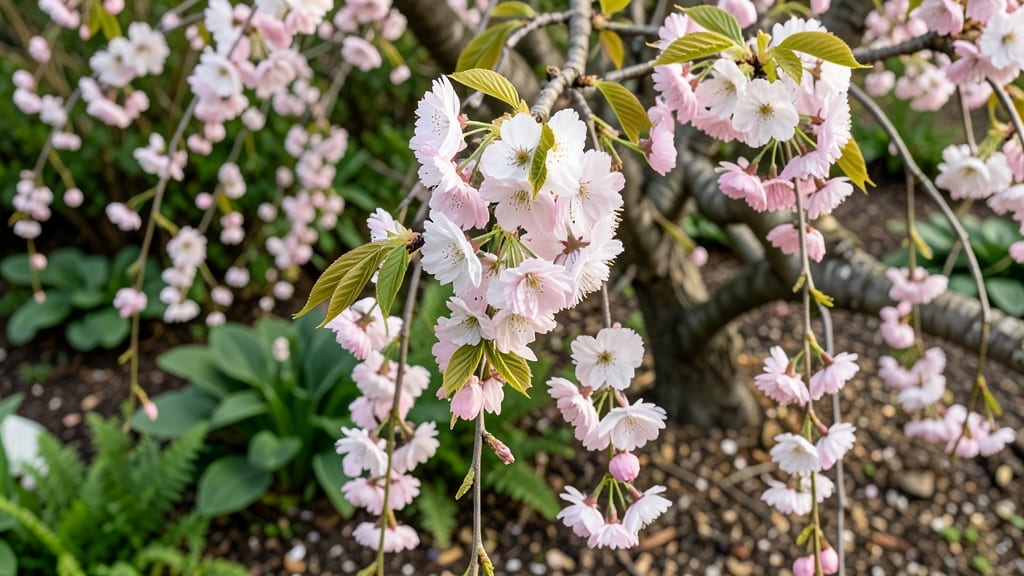
Your deer-resistant weeping cherry tree can survive deer pressure—without turning your yard into a fortress. 🌿 The key is combining natural deer resistance with smart deterrents, because while some cultivars are less appealing, deer will still nibble if they're desperate enough.
I learned this the hard way when my first tree lost half its branches before I acted.
Start with the right variety: 'Okame' and 'Royal Burgundy' weeping cherries are less palatable, but no tree is 100% deer-proof. Add a physical barrier like fencing (8 feet tall) around young trees, or wrap trunks with hardware cloth to deter chewing.
For repellents, try soapy water sprays or commercial deer repellents—reapply after rain.
Companion planting works too: rosemary, lavender, or boxwood near the base confuses deer with competing scents. Prune damaged branches in late winter to encourage new growth, and fertilize in early spring to strengthen the tree's resilience. Within a season, you'll see fresh buds pushing through.
The payoff? A lush, deer-resistant canopy that thrives year after year. This strategy works for both small yards and larger landscapes—no need for extreme measures. Here's how to put it all together without overcomplicating things.
📚 In This Guide
- What you need
- Instructions
- Tips and common mistakes
- Wrapping up and next steps
What you need
- ● Weeping cherry tree (Prunus serrulata 'Kanzan' or similar deer-resistant varieties) – 1 young sapling (3–5 gallons, 4–6 ft tall)
- ● High-quality potting soil or native soil mix – 5+ cubic feet (amended with compost for nutrients)
- ● Organic mulch (cedar, pine, or hardwood chips) – 2–3 bags (3–4 cubic feet total)
- ● Slow-release fertilizer (10-10-10 or organic alternative) – 1–2 lbs (follow package instructions)
- ○ Deer repellent spray (optional but helpful) – 1 gallon (e.g., Liquid Fence or Deer Out)
- ● Shovel or trowel (for digging)
- ● Garden gloves (1 pair)
- ● Watering can or hose with nozzle (for deep watering)
- ● Pruning shears (for shaping and maintenance)
- ● Measuring tape (to mark planting depth)
- ○ Stakes and twine (optional, for young tree support)
- ● A sunny location (6+ hours of direct sunlight daily)
- ● Well-draining soil (amend with compost if heavy clay)
- ● Space for mature tree (15–25 ft wide, 20–30 ft tall)
- ● Time for weekly watering (first year) and seasonal pruning
How to plant a deer-resistant weeping cherry tree
Here's the proven method I use to establish these graceful trees while keeping deer from turning them into snacks.
🌱 Step 1: Choose the Right Location and Soil Prep
Weeping cherries thrive in full sun (6+ hours daily) with well-draining soil. I always test the pH first—aim for 6.0-7.0. If your soil is heavy clay, amend with 2-3 inches of compost mixed into the top 12 inches of soil. Deer avoid areas with strong fragrances, so I plant mine near aromatic companions like rosemary or lavender.
Dig a hole twice as wide as the root ball but only as deep—planting too deep suffocates roots. Loosen the sides of the hole with a shovel to encourage root spread. This prevents transplant shock and gives roots room to establish quickly, which deer love to exploit when trees are still vulnerable.
🪴 Step 2: Plant and Stake for Stability
Remove the tree from its container and gently separate the roots if they're circling. Place it in the hole so the top of the root ball sits 1-2 inches above ground level—settling will occur over time. Backfill with native soil (not amended mix) to prevent nutrient overload that stresses young trees.
Water deeply before backfilling to eliminate air pockets, then tamp soil lightly around the base. Install two stakes 6-8 inches from the trunk at opposite sides, angled away from the tree. Use soft tree ties (not wire) to secure the trunk—deer will rub against rough materials, damaging bark. Mulch with 3 inches of shredded bark, keeping it 6 inches away from the trunk to prevent rot.
☀️ Step 3: Apply Deer Deterrents Immediately
Deer resistance starts at planting. I wrap the trunk with hardware cloth (not fencing) for the first 2 years, buried 12 inches deep to block gnawing. Sprinkle hot pepper wax around the base—deer avoid the scent. Plant 1-2 deer-resistant shrubs (like boxwood or barberry) within 3 feet of the tree to create a natural barrier.
Water deeply twice weekly during the first growing season, focusing on the root zone. Healthy trees grow faster and develop stronger bark that deer find less appealing. I also install motion-activated sprinklers on a timer—deer hate the sudden spray and will avoid the area entirely.
✂️ Step 4: Prune and Maintain for Long-Term Resistance
First pruning occurs after 1 year to remove any suckers or damaged branches. I always prune in late winter (before buds swell) to encourage new growth. Thin the canopy to improve air circulation—deer are less likely to browse trees with dense foliage that obscures their approach.
Fertilize in early spring with 10-10-10 granular fertilizer spread 6 inches from the trunk. Avoid high-nitrogen fertilizers—they produce tender new growth that deer find irresistible. I also apply deer-repellent granules around the drip line every 6 weeks during browsing season (spring and fall).
⏰ Step 5: Monitor and Adjust for Seasonal Protection
Check the hardware cloth annually—deer can still gnaw through weakened spots. Replace any damaged sections immediately. In winter, when deer browse is most severe, I wrap the entire tree with burlap for added protection. This creates a physical barrier while allowing light and air to reach the foliage.
By year 3, most weeping cherries develop thick enough bark that deer lose interest. I keep the deterrents in place for 5 years total, then transition to seasonal checks. The key is consistency—deer learn patterns, so I rotate deterrent methods yearly to keep them guessing.
Tips & tricks for perfect weeping cherry tree planting
A few strategic moves can make all the difference between a thriving weeping cherry and a deer buffet. Here's what I've learned from years of battling these persistent browsers.
Soil Science Matters: When amending your 2-3 inches of compost into the top 12 inches of soil, I recommend mixing in 1 cup of bone meal for the first planting. This gives young trees a phosphorus boost that strengthens root development—critical when deer are watching. The bone meal also deters browsing by making the soil less appealing for digging.
Staking Strategy: Those 6-8 inches from the trunk for your stakes aren't arbitrary—they create the perfect tension angle. I've found that using three stakes (instead of two) forms a triangular support system that prevents leaning, which deer often exploit to reach the trunk. The stakes should be 1/3 buried in the ground for maximum stability.
Deer Deterrent Layering: The hardware cloth wrapped for 2 years is your first line of defense, but I add a second layer of protection by planting 1-2 deer-resistant shrubs within 3 feet of the tree. Choose varieties like boxwood or barberry—their prickly texture and strong scent create a natural barrier that deer instinctively avoid. This creates a 360-degree protection zone around your weeping cherry.
Seasonal Adjustments: During winter when deer browse is most aggressive, I've had success adding reflective tape to the hardware cloth. The flashing movement scares deer away—it's like a silent alarm system. In spring, when new growth emerges, I switch to a commercial deer repellent spray applied every 2 weeks instead of the 6-week granules to coincide with their heightened browsing instincts.
Pro Tips for Weeping Cherry Tree Deer Resistant
- A few strategic moves can make all the difference between a thriving weeping cherry and a deer buffet.
- Soil Science Matters: When amending your 2-3 inches of compost into the top 12 inches of soil, I recommend mixing in 1 cup of bone meal for the first planting.
- Staking Strategy: Those 6-8 inches from the trunk for your stakes aren't arbitrary—they create the perfect tension angle.
Frequently asked questions
Got questions about keeping deer away from your weeping cherry tree? Here are some common ones—and their answers—to help you plan with confidence!
How do I know if deer are already damaging my weeping cherry tree?
Look for chewed leaves, bark, or branches—especially near the top where deer can’t reach as easily. You might also spot browse lines (cleanly cut stems) or scat near the tree. If the tree’s growth seems stunted or flowers are missing, deer could be the culprit!
How long does it take for deer-resistant strategies to work?
Results vary! Physical barriers (like fencing) work immediately, while repellents or plants may take 1–2 weeks to show effects. Consistency is key—reapply sprays every 4–6 weeks or after rain. Patience pays off!
Are there deer-resistant weeping cherry tree alternatives?
Yes! Consider these low-maintenance, deer-deterrent options:
- Kwanzan Cherry (Prunus serrulata ‘Kwanzan’): Tougher bark, but still attractive—try deer repellent.
- Serviceberry (Amelanchier): Less palatable, with edible berries for birds (not deer!).
- Japanese Maple (Acer palmatum): Deer usually avoid its bitter leaves.
Pro tip: Mix textures (e.g., add boxwood or Russian olive) to confuse deer!
What’s the most effective deer-resistant method for my weeping cherry?
A combo approach wins! Start with a 8-foot tall fence (deer can jump!), then add:
- Repellents (like Liquid Fence or hot pepper wax).
- Plant companions (e.g., allium, daffodils, or lavender around the base).
- Motion-activated sprinklers for extra scare tactics.
Bonus: Prune trees in late winter to reduce browse appeal!
My deer repellent stopped working—what now?
If sprays lose effectiveness, rotate products (deer adapt to scents!). Try:
- Physical barriers (e.g., plastic tree guards or chicken wire wrapped around trunks).
- Ultrasonic devices (though results vary—test first!).
- Professional help: A local wildlife control expert can assess severe cases.
Warning: Avoid harming deer—focus on protecting your tree!
Wrapping up and next steps
Transforming your landscape into a deer-resistant paradise with a weeping cherry tree is not only achievable but also rewarding! 🌿 These stunning trees offer beauty and practicality, keeping those pesky deer at bay while adding elegance to your yard.
Whether you’re a gardening novice or a seasoned pro, now’s the perfect time to plant, protect, and enjoy your new focal point.
Ready to take the next step? Research local nurseries for deer-resistant varieties, sketch a planting plan, and schedule your tree’s arrival—your future will thank you! 🌟