
Plants
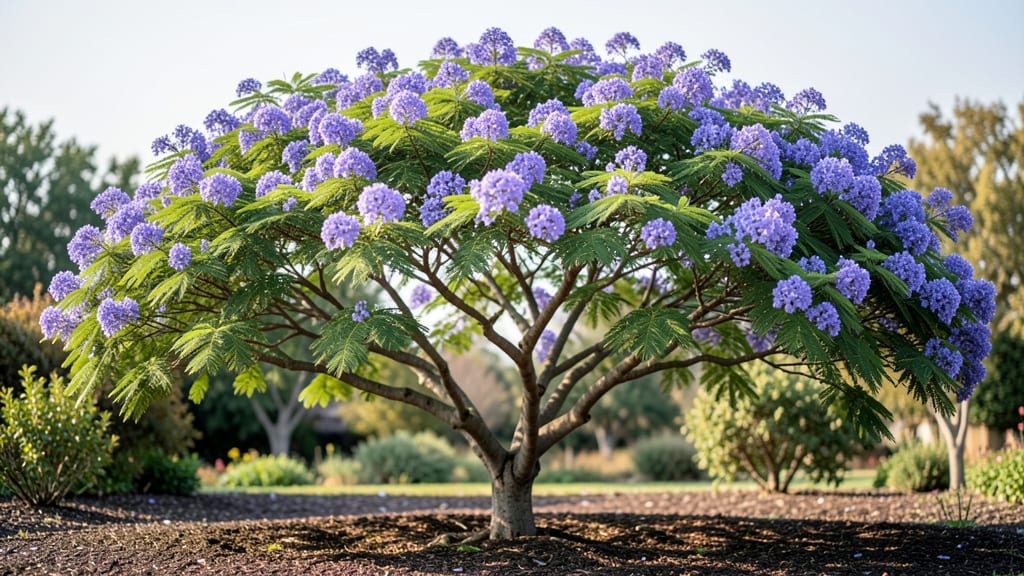
A jacaranda tree looks like a stunning tropical showstopper with its signature lavender-blue trumpet-shaped flowers that bloom in dense, cascading clusters. The tree's lush, fern-like foliage creates a vibrant green backdrop, while its rounded, spreading canopy and multi-trunked structure give it a graceful, almost whimsical appearance.
A jacaranda tree's most iconic feature is its dramatic floral display, which transforms streets and gardens into dreamy purple clouds during spring and summer. 🌸 The flowers grow in clusters of 100-200 blooms per stem, creating a breathtaking canopy effect that can reach 30-50 feet in height.
Beyond its flowers, the tree's smooth gray bark and delicate, compound leaves provide year-round interest, making it a favorite for both ornamental and shade purposes.
The jacaranda's growth habit is equally impressive—its spreading branches create a natural umbrella of shade, while the multiple trunks add architectural interest. This tropical beauty thrives in warm climates but can adapt to USDA zones 9-11, making it a sought-after choice for Mediterranean-style landscapes.
Its ability to self-clean (dropping old flowers and leaves naturally) also makes it a low-maintenance star.
What sets jacarandas apart is how they complement their surroundings. The soft lavender blooms contrast beautifully with bright green foliage, while the tree's airy canopy allows sunlight to filter through.
In urban settings, their fragrant flowers attract pollinators, creating a lively ecosystem. Whether planted as a street tree or garden specimen, jacarandas bring a touch of tropical elegance to any landscape.
💡 In This Article
- Identifying Jacaranda Flowers: Colors, Shapes, and Seasonal Bloom Patterns
- Jacaranda Tree Growth Habits and Landscape Design Uses
Identifying jacaranda flowers: colors, shapes, and seasonal bloom patterns
The jacaranda's flowers are its most breathtaking feature, with each bloom shaped like a delicate 5-inch-long trumpet that opens wide at the mouth.
These flowers grow in dense, pendulous clusters called racemes, where 100-200 blooms dangle from a single stem, creating a cascading effect that resembles a waterfall of lavender. 🌸 The petals are fused at the base and split into five lobes, giving them a slightly ruffled appearance when fully open.
While most jacarandas produce vibrant lavender-blue flowers, color variations exist—some cultivars display pale lilac or even near-white blooms, particularly in hotter climates where sunlight intensifies pigmentation.
The flower's color comes from anthocyanins, the same compounds that give blueberries their hue, which also make the blooms slightly UV-reflective—a trait that attracts pollinators like bees and butterflies. In cooler regions, blooms may appear slightly paler due to reduced sunlight exposure.
Timing of the bloom depends heavily on location: in Southern California, jacarandas typically flower from mid-February to April, while in Florida, they may bloom as late as May or June.
The tree's foliage undergoes a noticeable transformation before and after blooming—new leaves emerge bright green in spring, often while flowers are still present, creating a stunning two-tone effect of purple and green. As summer progresses, the flowers drop naturally, leaving behind fern-like compound leaves that turn a deeper green.
What's fascinating is how the tree's flowering cycle is triggered by temperature shifts. Jacarandas require a period of cooler nights (below 60°F) followed by warm days to initiate blooming—a process called vernalization.
This is why urban jacarandas often bloom earlier in cities with milder winters, like Los Angeles, compared to rural areas with more extreme temperature swings.
The scent of jacaranda flowers is another key identifier—many describe it as sweetly floral with a hint of vanilla, though some varieties are nearly scentless.
Post-bloom, the tree enters a dormant phase where it focuses on leaf production and root growth. The leaves are pinnate (feather-shaped) with 10-15 leaflets per stem, each measuring about 1-2 inches long.
These leaves provide year-round interest, even when no flowers are present, making the jacaranda a four-season ornamental. The tree's ability to self-prune—dropping old flowers and leaves naturally—also contributes to its low-maintenance appeal.
For those trying to identify a jacaranda, pay attention to these three key visual cues:
- Flower shape: Trumpet-shaped with five distinct lobes, growing in dense clusters
- Color palette: Predominantly lavender-blue, but may vary to lilac or white
- Foliage texture: Fern-like, compound leaves that remain green year-round
The combination of these features makes the jacaranda instantly recognizable—even from a distance, its purple canopy stands out against any landscape. 💫