
Pruning
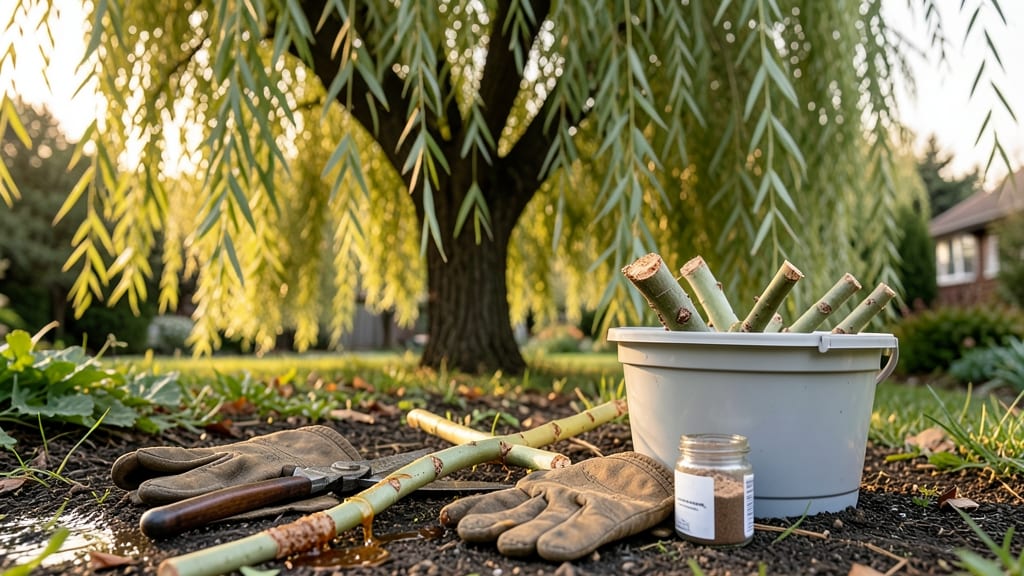
Willow tree cutting isn't just about hacking branches—it's about sculpting a tree that thrives for decades. 🌿 I've learned the hard way that willows respond dramatically to pruning, and doing it wrong can trigger sap bleeding, weak regrowth, or even structural failure.
The key is timing, technique, and knowing exactly where to make those cuts to encourage strong, healthy growth without overstressing the tree.
Most gardeners prune willows in late winter or early spring before new growth begins, but there's a trick to minimizing sap loss: seal cuts larger than 2 inches with pruning sealant. You'll need sharp loppers, pruning saws, gloves, and safety goggles—no dull tools here.
The goal is clean cuts just outside the branch collar, never leaving stubs that invite disease. Willow wood also rots quickly when left on the ground, so remove debris promptly to avoid waterway pollution if you're near streams or ponds.
What you'll end up with is a willow that grows taller, straighter, and more vigorous than ever before. Proper pruning opens the canopy to sunlight, reduces the risk of storm damage, and keeps those pesky root suckers in check.
I've seen willows that were once tangled messes transform into elegant, productive trees after just one careful pruning session. The secret is patience—willows grow fast, but they need time to recover from major cuts.
Here's the catch: willows are resilient but not invincible. Over-pruning can weaken them, and cutting too late in the season encourages weak, late-season growth. If you're near water, be extra cautious—willow debris can clog streams.
Start small, observe how your tree responds, and you'll have a willow that's both beautiful and structurally sound for years to come.
📚 In This Guide
- What you need
- Instructions
- Tips and common mistakes
- Wrapping up and next steps
What you need
- ● Pruning shears or loppers: Bypass pruners (for small branches, ¼”–¾” thick) or loppers (for branches ¾”–2” thick); ensure they’re sharp and sterilized (rubbing alcohol or bleach solution works).
- ● Hand saw or pruning saw: For thicker branches (2”+ thick); choose a curved-tooth saw to avoid tearing wood.
- ○ Extension pole saw: For high branches (optional but helpful for safety).
- ● Work gloves: Heavy-duty, cut-resistant gloves (e.g., mechanics’ gloves) to protect hands from thorns or sharp edges.
- ● Safety gear: Safety glasses (to shield from debris).
- ● Long sleeves/pants (to prevent scratches or sap irritation).
- ● Sturdy boots (for uneven terrain).
- ○ Disposable pruning sealant: (Optional) A tree wound dressing (e.g., Tanglefoot Tree Wound Pruning Sealer) to coat large cuts and reduce disease risk.
- ● Heavy-duty trash bags: For collecting debris (1–2 bags, depending on tree size).
- ● Ladder or step stool: If the tree is 6–10 feet tall; ensure it’s stable and extendable.
- ● Rope or harness: For very tall trees (if climbing is necessary).
- ● Hose or bucket: To clean sap off tools after cutting.
- ● Tree growth regulator: (e.g., hormone-based sprays) to encourage healthy regrowth post-pruning.
- ● Notebook & pen: To sketch a pruning plan before starting.
Step-by-Step guide to willow tree pruning
Willow trees grow fast but need careful pruning to stay healthy and strong.
✂️ Step 1: Gather the Right Tools
You'll need clean, sharp pruning shears for smaller branches and a pruning saw for thicker stems. I always disinfect my tools with rubbing alcohol before starting—willow trees are prone to fungal infections, and dirty tools spread disease fast. Wear gloves too; willow bark can irritate skin.
Check your shears for rust or dullness first. A sharp blade makes cleaner cuts that heal faster. If you're dealing with branches over 2 inches thick, grab your pruning saw. Willow wood is fibrous, so a dull saw will tear rather than cut cleanly.
🌿 Step 2: Identify What to Prune
Look for dead, diseased, or crossing branches first—these take priority. Dead branches snap easily when bent; diseased ones may have black spots or oozing sap. Crossing branches rub against each other, creating wounds that invite infection. Remove any branches growing toward the center of the tree to improve airflow.
Next, trim back any suckers (shoots growing from the base) and watersprouts (vertical shoots from the trunk). These compete with the main structure for nutrients. Willow trees also benefit from light thinning of the canopy to let sunlight reach the lower branches—aim for an open, vase-like shape.
✂️ Step 3: Make Clean, Strategic Cuts
Cut just outside the branch collar—the swollen area where the branch meets the trunk. This ensures the wound seals properly. For larger branches, make a 30-degree angle on the underside of the branch to prevent water from pooling. Never leave stubs; they rot and attract pests.
If you're shaping the tree, remove no more than 25% of the foliage at once. Willow trees recover quickly, but aggressive pruning weakens them. Start with the smallest branches first—they're easier to manage and let you see how the tree responds before tackling larger cuts.
🌱 Step 4: Clean Up and Monitor
Rake up all debris and dispose of diseased branches immediately. Willow leaves and twigs can harbor fungal spores, so don't compost them. Seal larger wounds with pruning sealant if they're over ½ inch wide, but skip it for small cuts—the tree's natural healing response works best when left undisturbed.
Water the base of the tree deeply after pruning to help it recover. Watch for new growth in 2-4 weeks—healthy willows sprout fresh leaves quickly. If you see yellowing leaves or oozing sap at the cut sites, that's a sign of stress or infection, and you may need to adjust your approach next time.
⏰ Step 5: Schedule Future Pruning
Willow trees need regular maintenance, ideally in late winter or early spring before new growth begins. Avoid pruning in fall—it stimulates late-season growth that won't harden off before winter. Mark your calendar for 6-12 months later to repeat the process, focusing on any new suckers or overcrowded branches.
Over time, you'll learn your tree's rhythm. A well-pruned willow develops a strong structure, resists disease, and produces lush foliage. The key is patience—willows respond best to gradual, thoughtful cuts rather than drastic changes. You'll see the difference in just one growing season.
Tips & tricks for healthy willow tree pruning
Here's what I've learned after years of working with willows—these tricks will keep your tree thriving after every cut.
Tool Prep is Everything: Before you even touch the tree, test your tools on a scrap piece of willow wood. I learned this the hard way after struggling with a dull saw that tore through branches instead of cutting cleanly. Willow wood is fibrous, so sharp tools are non-negotiable. If you're dealing with branches over 2 inches thick, switch to your pruning saw immediately—don't try to force shears through thick branches.
The 25% Rule for Shaping: When shaping your willow, remember the 25% guideline from Step 3—this isn't just a suggestion, it's a survival tip. Willow trees recover quickly, but removing more than a quarter of the foliage at once stresses the tree. Start with the smallest branches first; they're easier to manage and let you see how the tree responds before tackling larger cuts. This gradual approach prevents shock and encourages stronger regrowth.
Wound Healing Insights: That ½-inch rule for sealing larger wounds is crucial. Small cuts will heal naturally, but anything bigger needs protection. I've seen willows develop fungal infections from unsealed wounds that collected moisture. After sealing, give the tree a deep watering to help it recover. Watch for new growth in 2-4 weeks—if you don't see fresh leaves appearing, that's your sign to be more gentle next time.
Seasonal Timing Secret: The instructions mention late winter or early spring, but here's the real secret: willows respond best when pruned just before their natural growth spurt. In most climates, this means February-March, but if you're in a warmer zone, aim for December-January. Avoid fall pruning completely—it stimulates tender new growth that won't survive winter frost.
Pro Tips for Willow Tree Cutting
- Here's what I've learned after years of working with willows—these tricks will keep your tree thriving after every cut.
- Tool Prep is Everything: Before you even touch the tree, test your tools on a scrap piece of willow wood.
- The 25% Rule for Shaping: When shaping your willow, remember the 25% guideline from Step 3—this isn't just a suggestion, it's a survival tip.
Frequently asked questions
Got questions about cutting back your willow tree? You’re not alone!
Here are some of the most common concerns—plus clear, actionable answers to keep your tree thriving.
When is the best time to cut a willow tree?
The ideal window is late winter or early spring (before buds break) to minimize stress and disease risk. Avoid pruning in fall—willows heal slowly, and late cuts can invite pests. For emergency cuts (e.g., storm damage), act quickly but seal wounds with pruning sealant to prevent rot.
Can I cut a willow tree too much? What are the signs?
Yes! Over-pruning weakens willows, leading to suckers, dead branches, or stunted growth. Never remove more than 25% of the canopy in one year. Watch for yellowing leaves, excessive water sprouts, or dieback—these signal stress. If you’ve pruned aggressively, focus on structural cuts and feed the tree with compost to recover.
Do I need special tools to cut a willow tree?
Willows have fast-growing, flexible wood, so sharp tools are a must! Use:
- Pruning shears for small branches (<1” diameter).
- Loppers for branches 1–3” thick.
- A handsaw or chainsaw for thick trunks (4”+).
- Pruning sealant to coat large cuts and prevent disease.
What if my willow keeps growing back after cutting?
Willows regenerate aggressively from roots or stumps—this is normal! To control regrowth:
- Cut below the soil line (if stump-sprouting).
- Apply vinegar or copper sulfate to fresh cuts to deter new shoots.
- For invasive species, consider root barriers or professional removal.
Can I cut a willow tree in summer? Will it survive?
Summer pruning is riskier but possible if done carefully. If you must cut:
- Do it on a cool, cloudy day to reduce stress.
- Avoid heavy pruning—stick to dead or diseased branches only.
- Water deeply before and after to help recovery.
Wrapping up and next steps
Cutting a willow tree with care ensures its health, beauty, and longevity—while keeping your landscape safe and tidy. 🌿 Whether you’re pruning for shape, removing dead branches, or controlling growth, precision makes all the difference.
Now that you’re armed with the right tools, techniques, and safety tips, it’s time to roll up your sleeves and give your willow the TLC it deserves!
Ready to tackle the job? Start by marking your cuts, gather your supplies, and take it one branch at a time. And if you’re unsure about a tricky cut? Don’t hesitate to call in a professional—your tree (and your peace of mind) will thank you!